
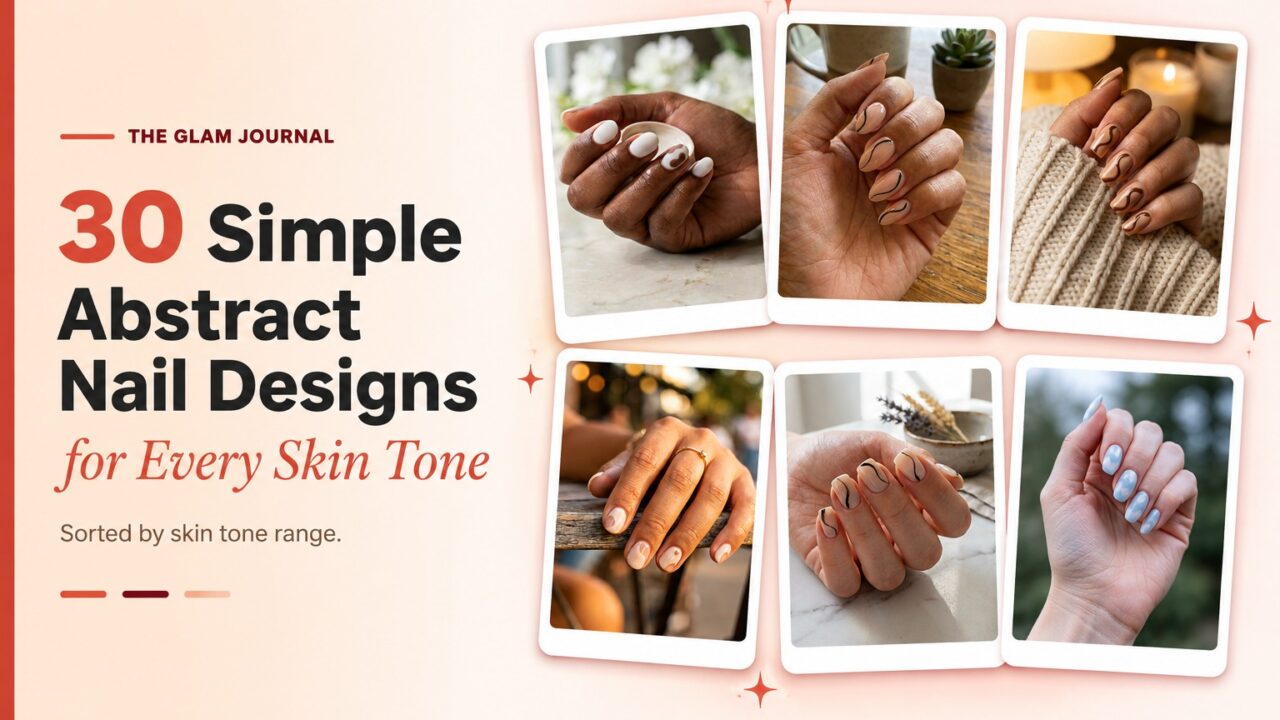
Abstract nail designs work on every complexion, but the same swirl reads completely differently on fair skin than it does on deep skin. Contrast is the reason. A charcoal line on a cream base sits sharp and graphic against porcelain hands, while the same line on deep skin needs a lighter base underneath it to register at all. This guide sorts 30 simple abstract sets into four skin tone ranges: fair, light to medium, olive and tan, and deep. Each design uses two to four colors, most take 20 to 40 minutes at home, and none of them require a steady hand or a fine art degree. You’ll find the base shade, the line color, the tools, and the reason each combination flatters that particular range. Start with your undertone, then pick the design.
How Skin Tone Changes Abstract Nail Art
Skin tone decides how much contrast your design needs to actually show up. Two things matter here, and people mix them up constantly.
Skin tone is the surface color you see in daylight: fair, light-medium, olive or tan, deep. Undertone is the hue sitting underneath, and it never shifts, no matter how much sun you get. Warm undertones read yellow, gold, or peach. Cool undertones read pink, red, or blue. Neutral sits between the two.
Two quick checks tell you which you are:
- Check your wrist veins in daylight. Green veins mean warm. Blue or purple veins mean cool. Blue-green means neutral.
- Check your jewelry drawer. Gold flattering you points to warm. Silver flattering you points to cool. Both working equally well points to neutral.
Once you know your range, the design rules get simple. Fair skin needs mid-contrast, not maximum contrast, or the hand disappears behind the art. Olive skin fights grey and cool pink, a clash sometimes called tonal collision, where the polish and the green-gold cast in the skin cancel each other out. Deep skin carries saturation better than any other range and can take a pigment density that would look heavy elsewhere.
Undertone also picks your metallic. Gold, bronze, and copper belong to warm hands. Silver and chrome belong to cool ones. That single choice shows up in almost every design below, so lock it in before you open the polish drawer.
One more variable worth knowing: lighting. Olive skin in particular shifts warm under daylight and cool under indoor bulbs, which is why a polish that looked perfect in the salon can look muddy at home. Swatch on your actual nail, then walk to a window. If the shade suddenly looks grey or oddly pale, it’s fighting your undertone rather than working with it.
Nail shape plays a smaller role, but it isn’t nothing. Short square nails give you less canvas, so one or two elements per nail is the ceiling. Almond and long shapes hold three or four comfortably. Every design below works on short nails, but the ones built around a single line or single stroke translate best.
Abstract Nail Designs for Fair Skin
Fair skin burns before it tans and carries either pink or peach undertones. The trap here is going too pale, since a base within a shade of your own hand leaves you washed out. Aim for mid-contrast art on a soft base, and reach for cool metallics if your veins run blue.
1. Cream Base With Charcoal Linework
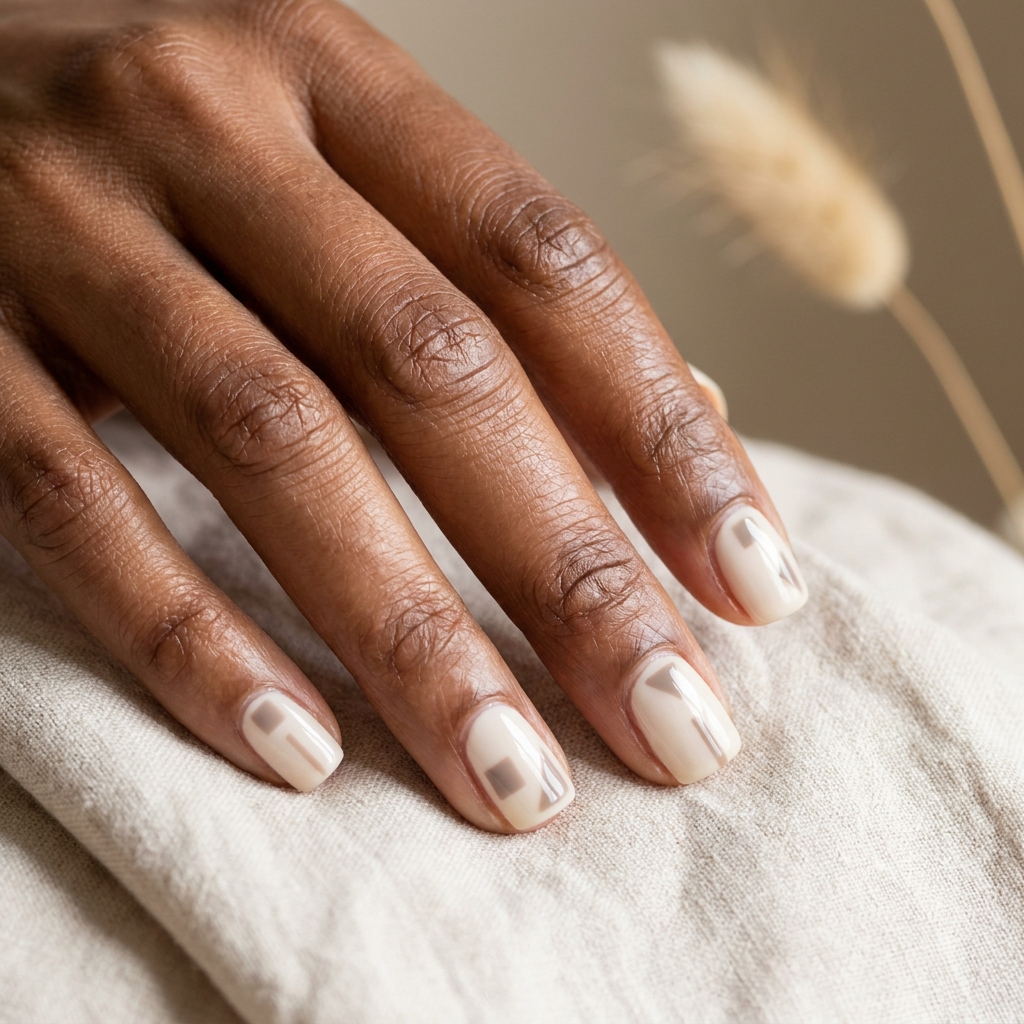
A milky cream base with two or three thin charcoal lines per nail. Not black, charcoal. Pure black on very fair hands looks like a mistake at close range, while charcoal softens the edge. Draw the lines with a striping brush, letting them run off the nail edge rather than stopping mid-plate.
2. Single Off-White Brushstroke
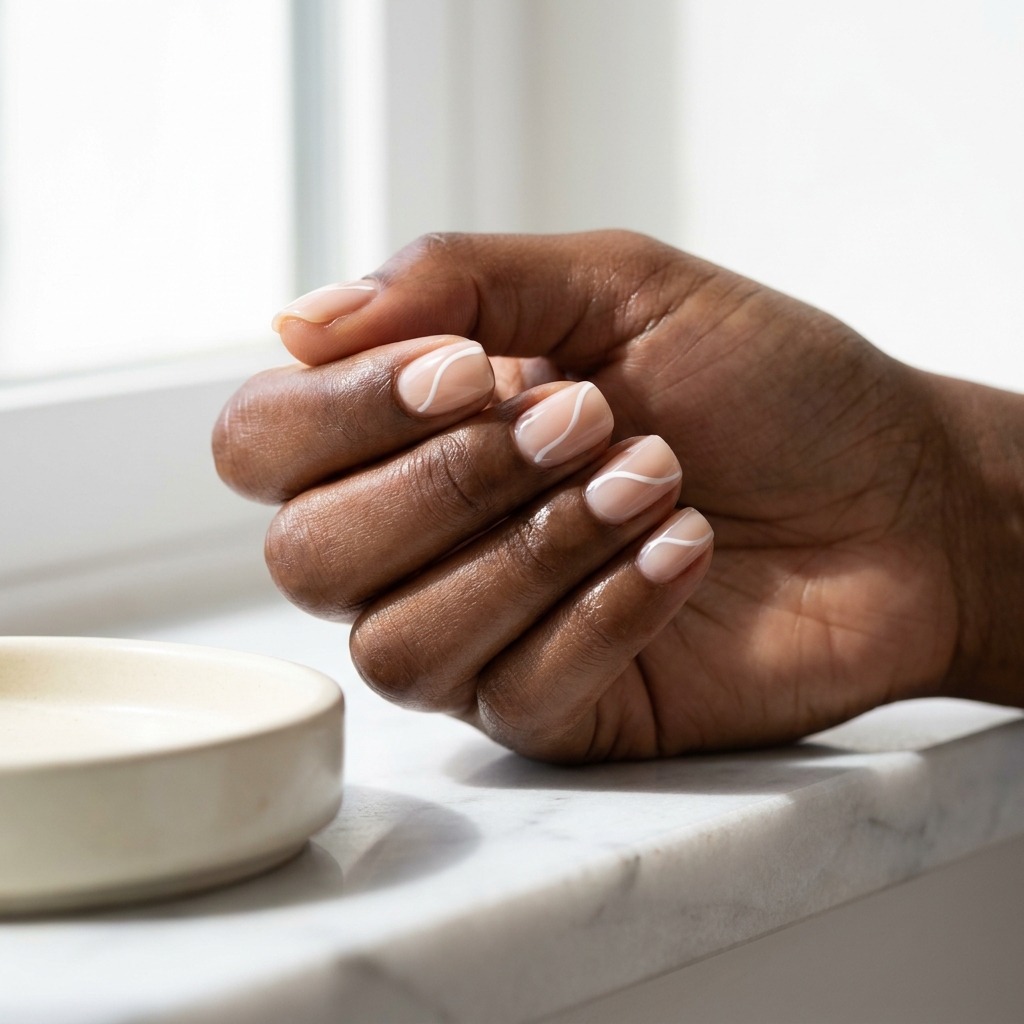
One diagonal off-white stroke across a sheer pink base, loaded with a flat brush and pulled in a single motion. The wobble is the point. Perfect strokes look printed, imperfect ones look painted.
3. Charcoal Dots on Sheer Nude
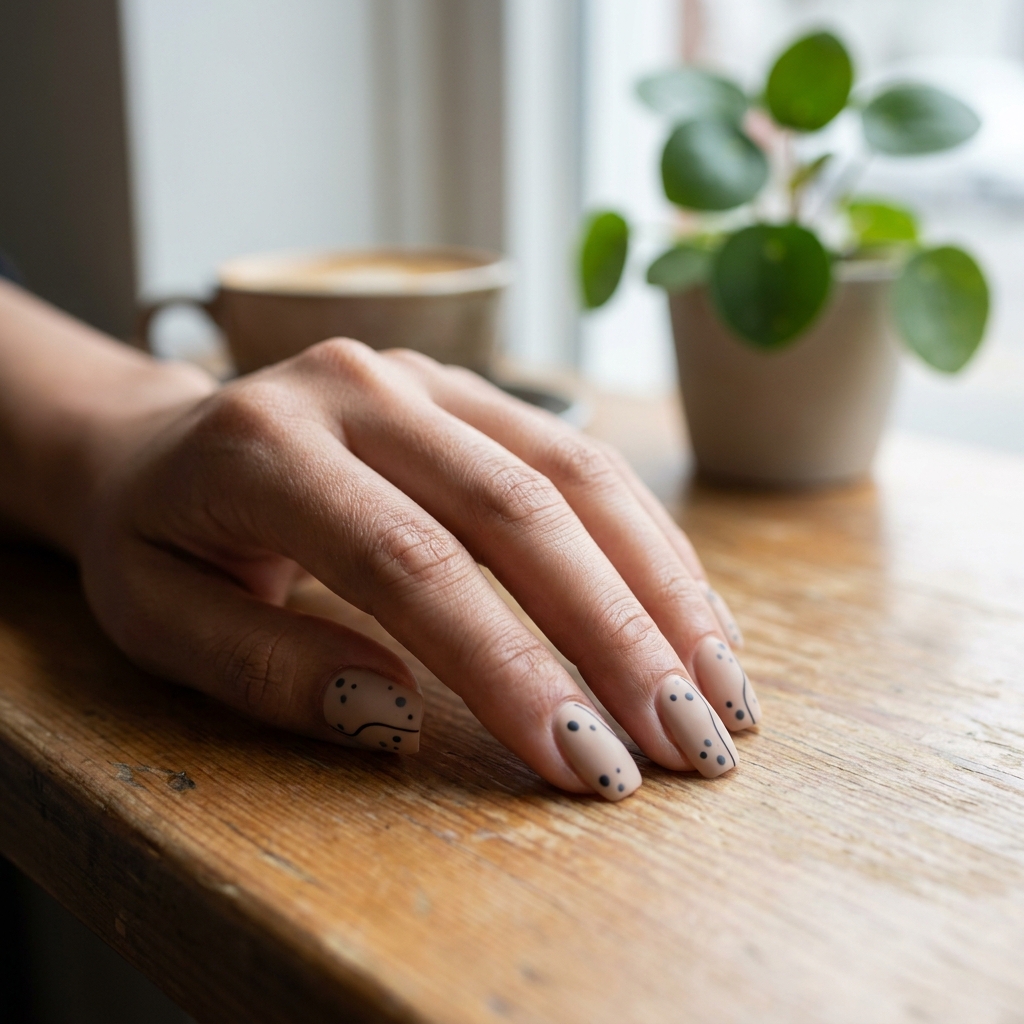
Scatter three to five dots per nail with a dotting tool, sizes deliberately uneven. Keep them off-center. A grid of matching dots reads like polka dots, not abstract art.
4. Negative Space Half-Moon
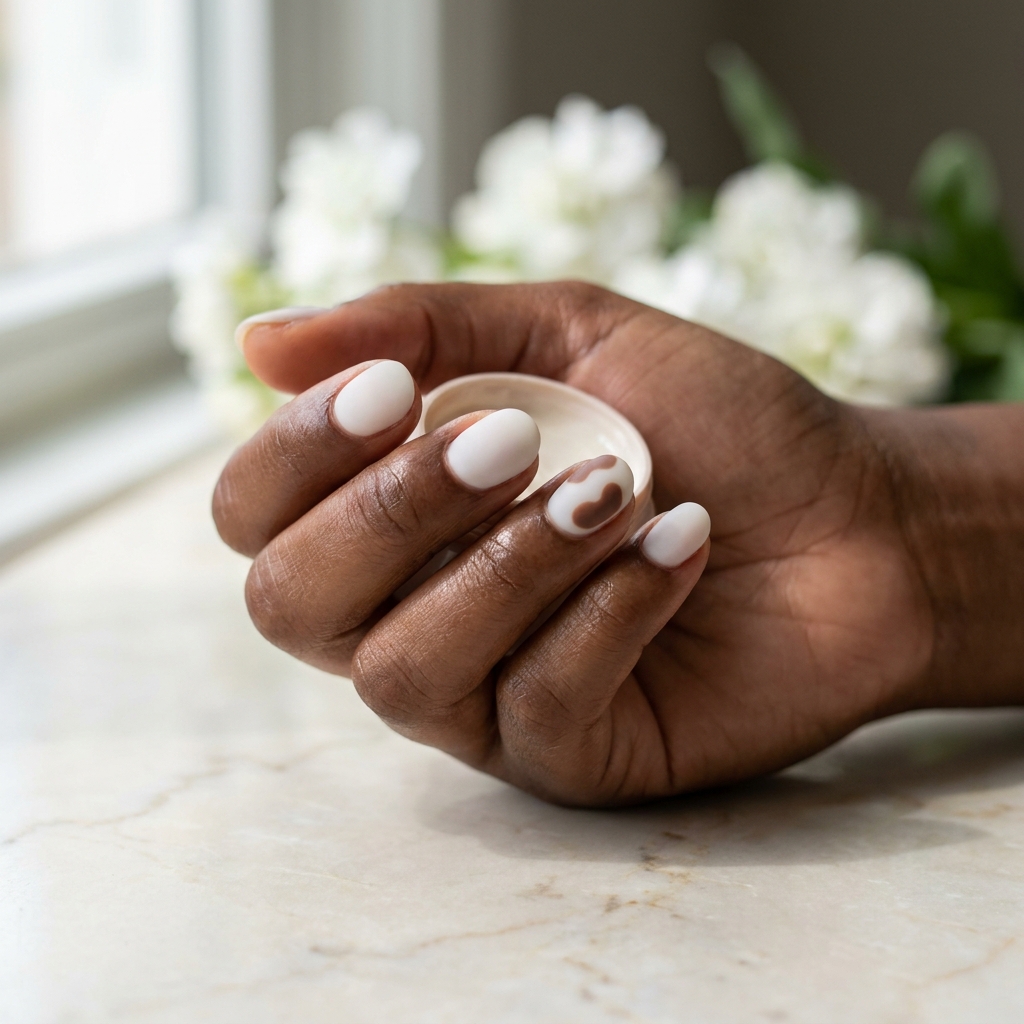
Leave the moon of the nail bare and paint the rest in soft grey. The bare crescent does the work, and grow-out stays invisible for three to four weeks.
5. Silver Chrome Ribbon
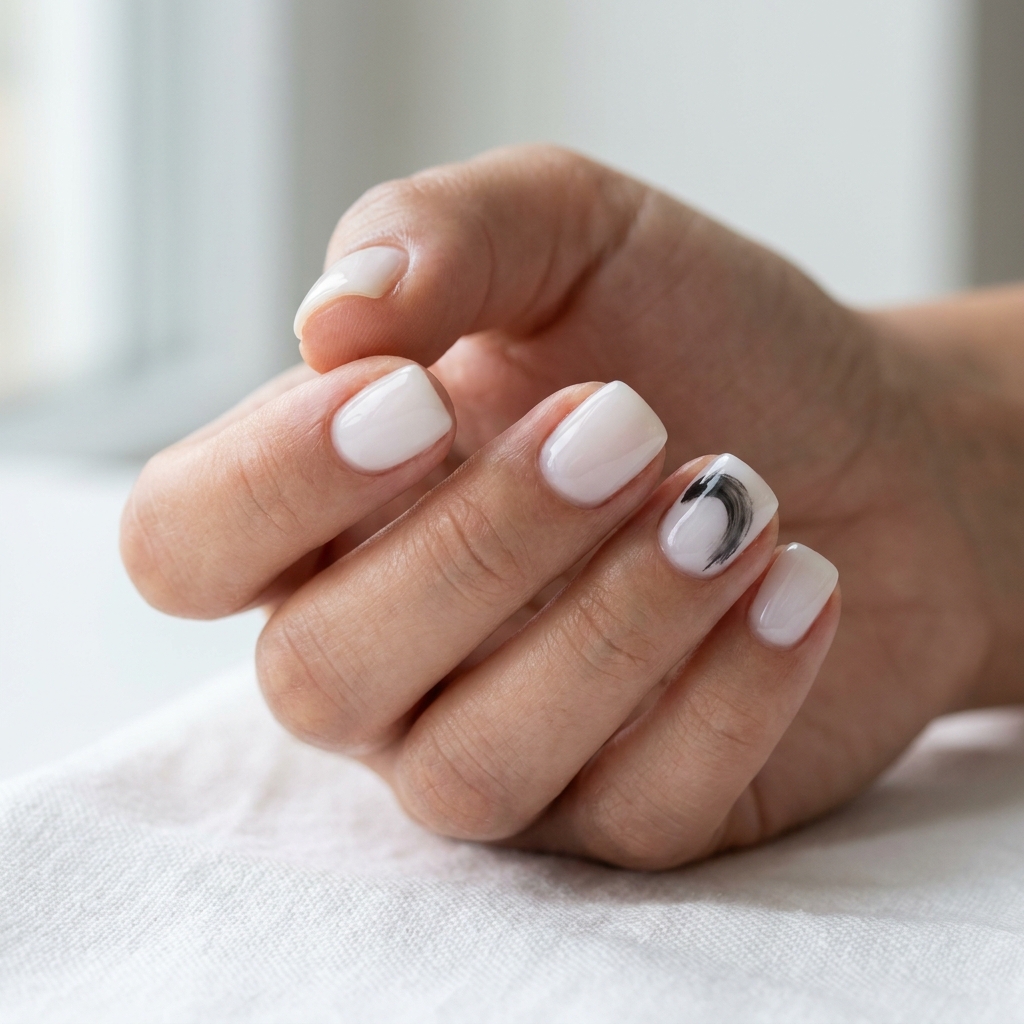
A thin ribbon of silver chrome curving across a pale lilac base. Cool undertones read silver as luminous where gold would read brassy.
6. Two-Tone Color Block
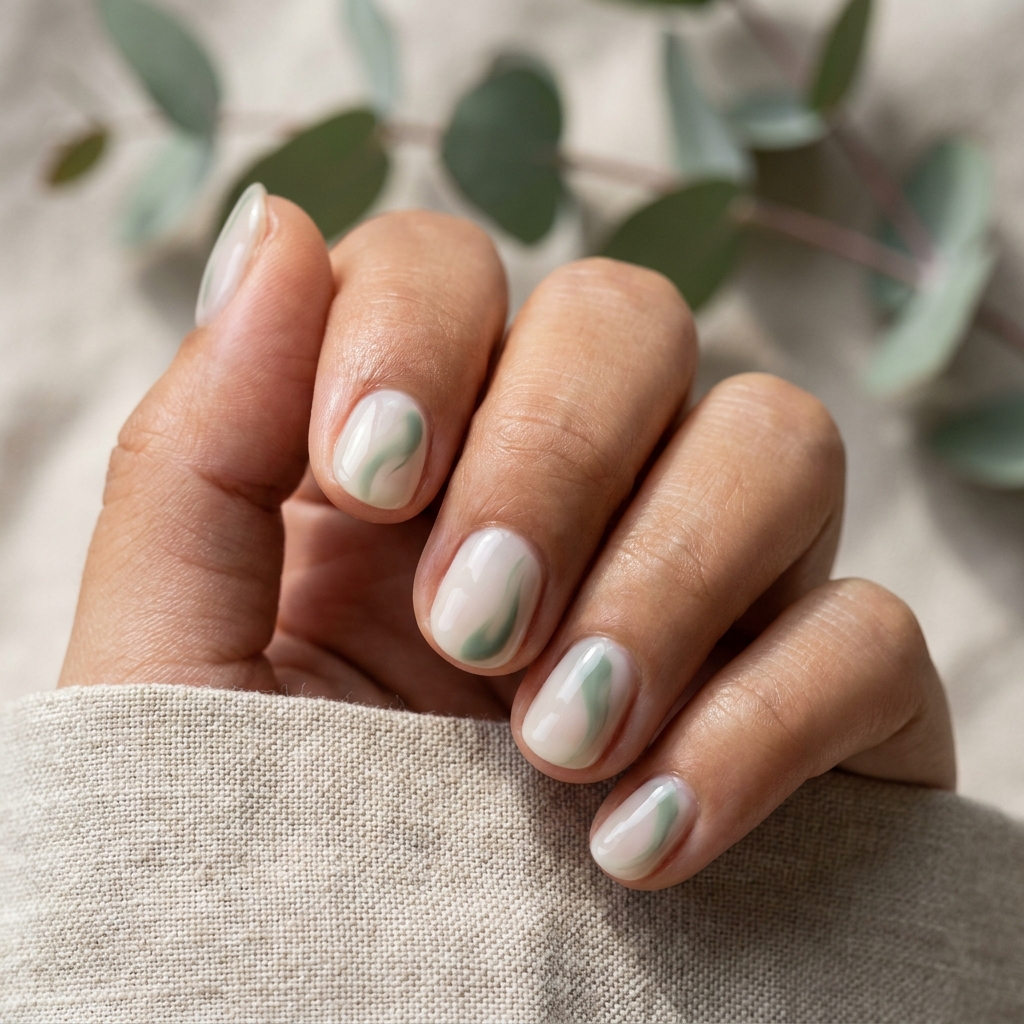
Split the nail diagonally: dusty rose on the bottom, warm white on top. Tape the line if your hand shakes, then peel while the polish is still tacky.
7. Ballet Pink With Ink Squiggle
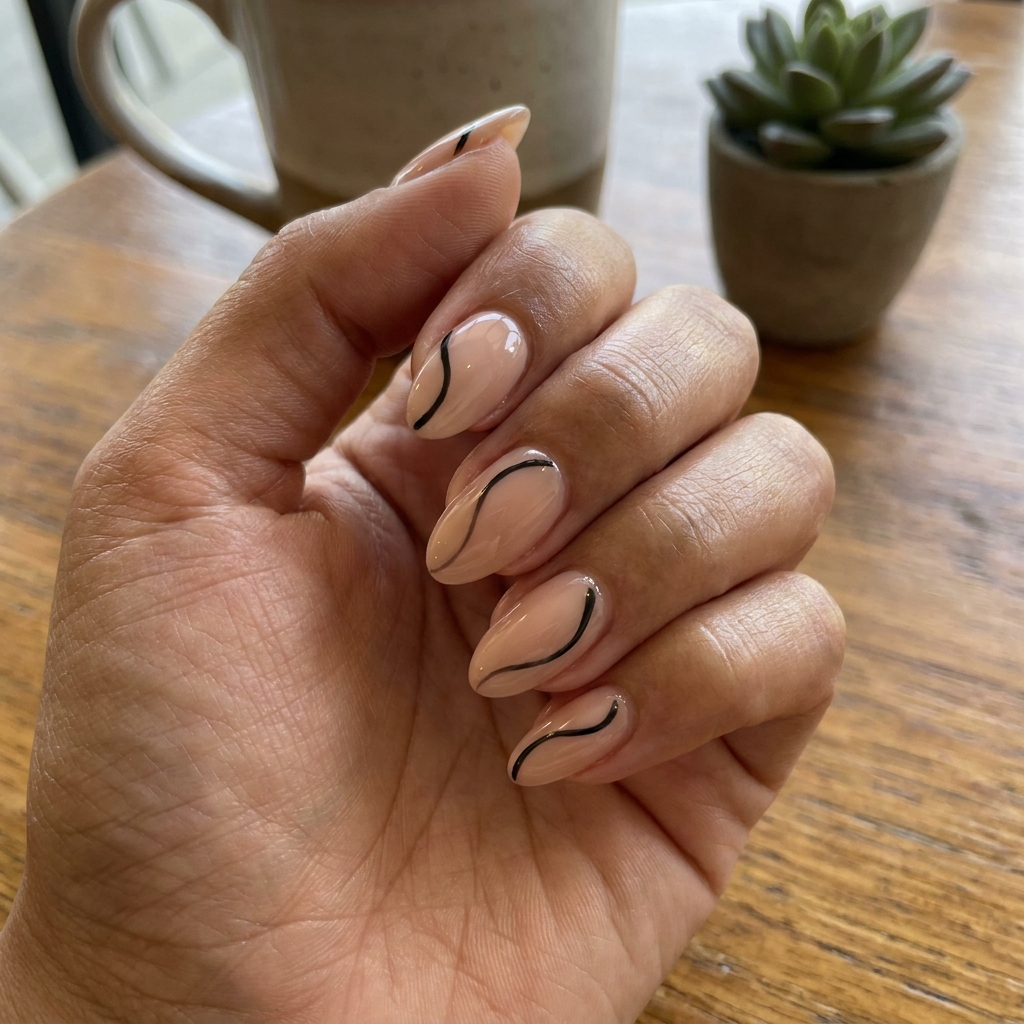
A single loose squiggle in navy ink across a ballet pink base. One squiggle per nail. Two starts to look busy.
8. Matte Grey With Glossy Lines
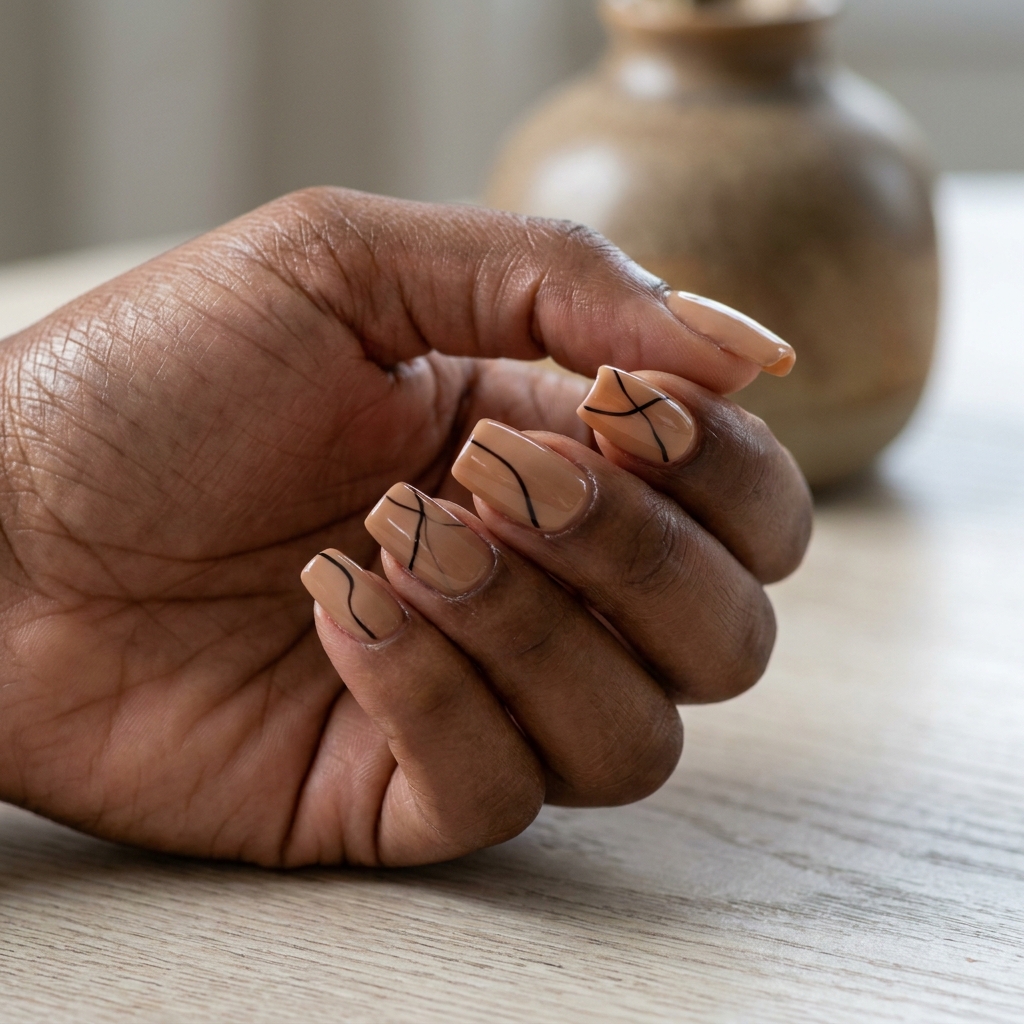
Matte the whole nail, then draw glossy topcoat lines over it. Same color, two finishes, no second polish needed. Finish is doing all the design work here.
Fair hands hold cool metallics beautifully, but light to medium skin opens up warmer options entirely.
Abstract Nail Designs for Light to Medium Skin
Light to medium skin tans gradually and sits comfortably in the widest color range of the four. Peach, coral, mauve, and warm neutrals all land well. This range can also carry soft yellow, sage, and terracotta without either overpowering or vanishing.
9. Peach Brushstroke on Cream
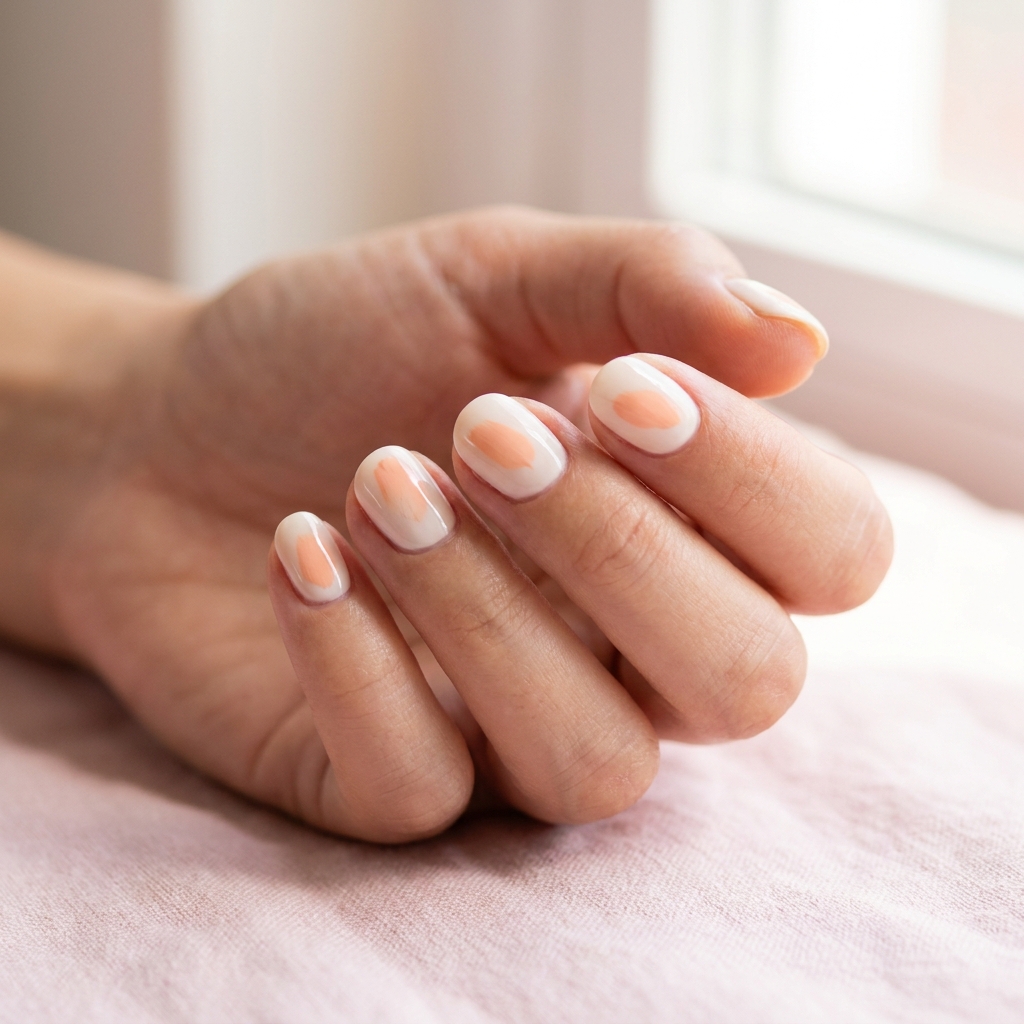
A peach brushstroke sweeping from the cuticle to the tip on a cream base, one nail per hand as an accent, the rest left plain cream. Restraint reads expensive.
10. Terracotta Shapes on Nude
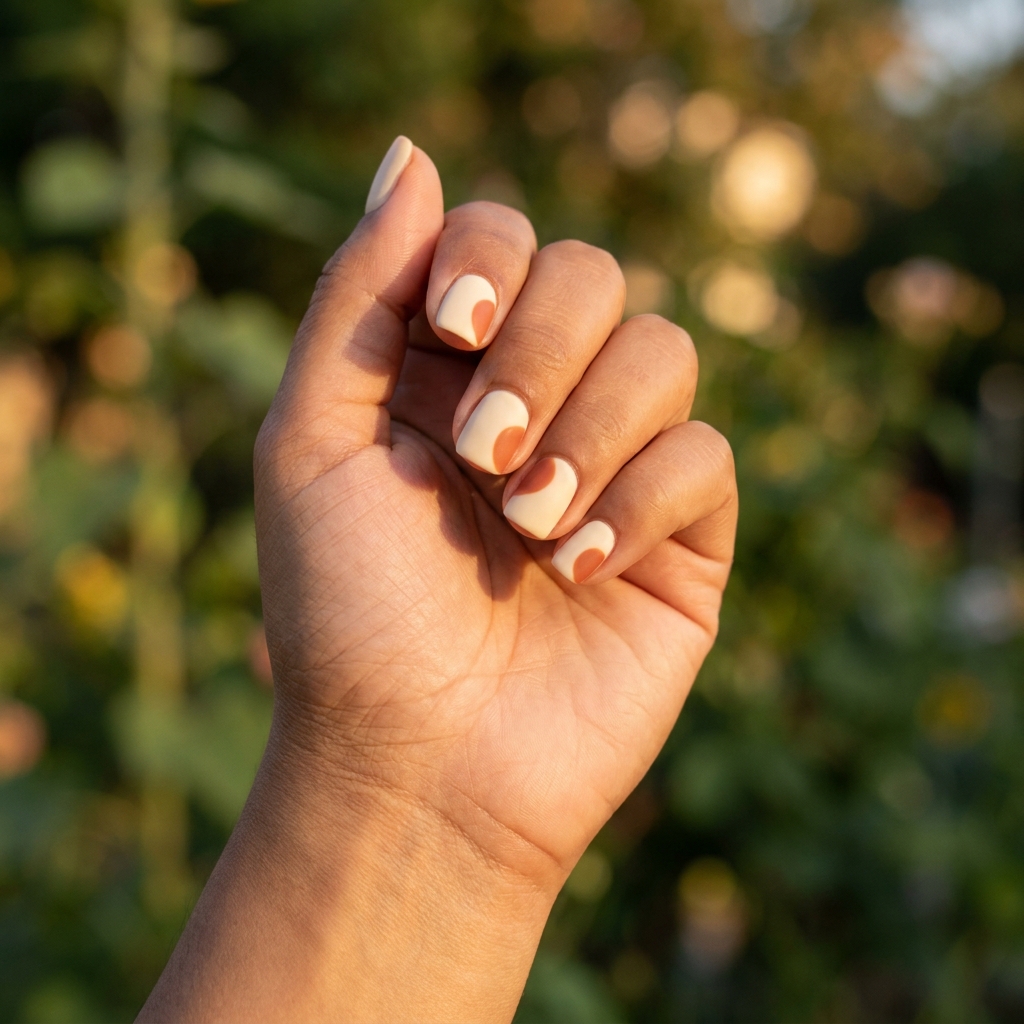
Two or three terracotta blocks per nail: one rectangle, one soft circle, one wedge. Uneven placement. Straight geometry needs precision and this design deliberately avoids it.
11. Sage Line Over Warm Beige
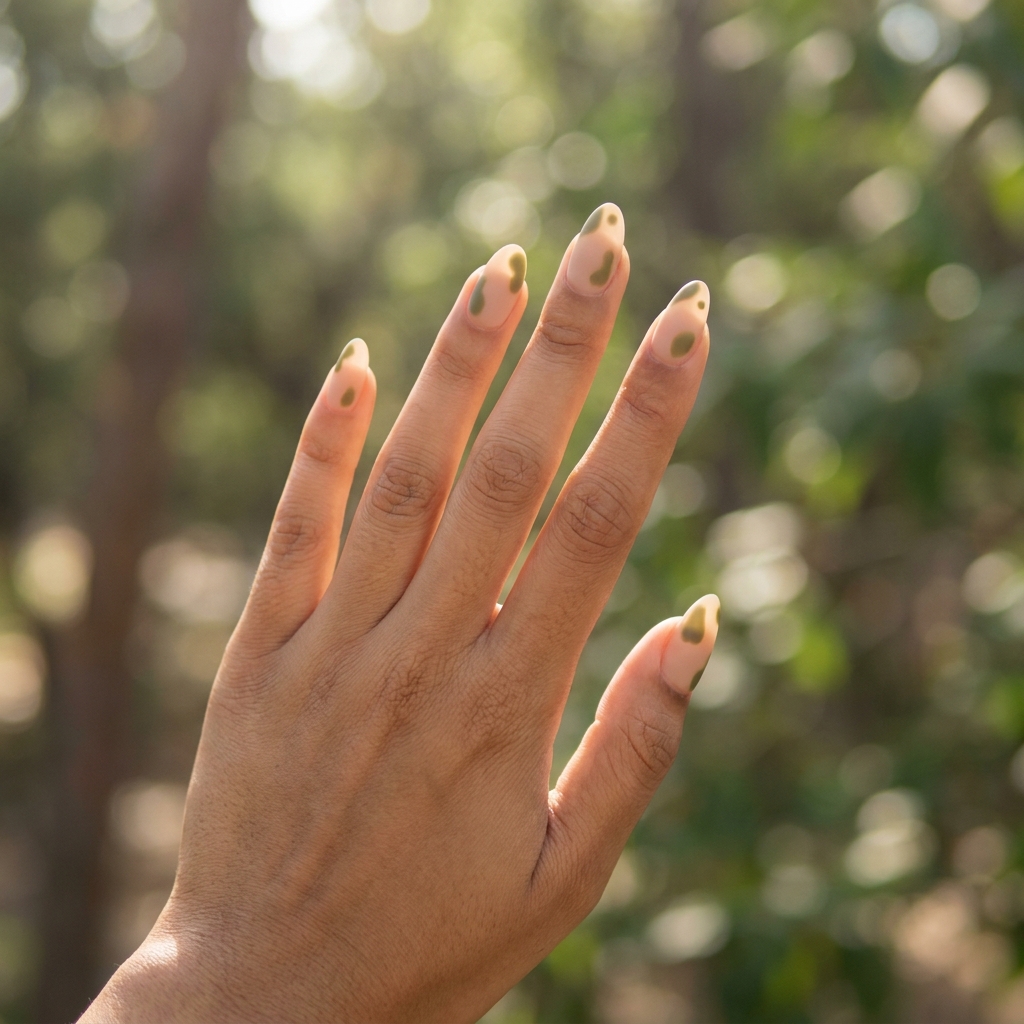
A single sage green line tracing the natural curve of the nail bed. Green and beige sit close on the color wheel, so this stays subtle at arm’s length and sharp up close.
12. Bronze Half-Moon
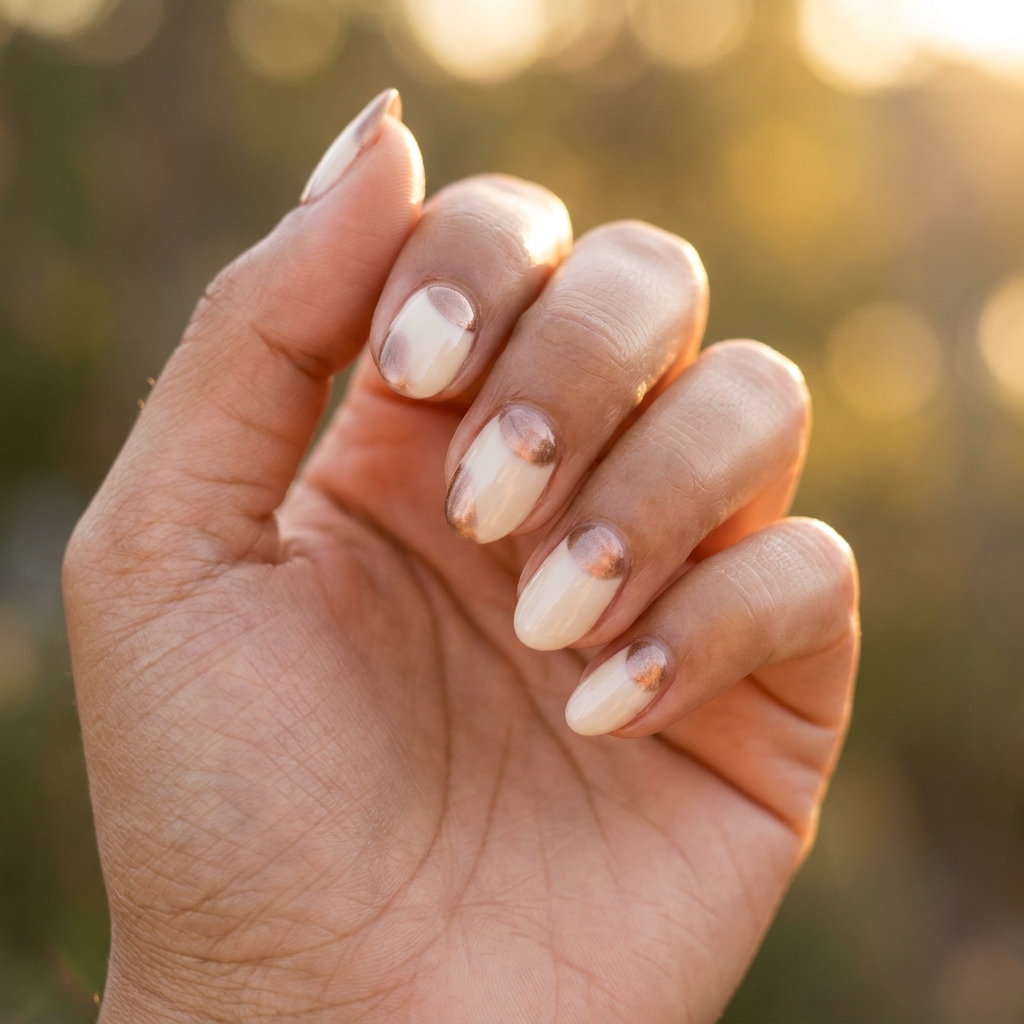
Fill the moon area in bronze chrome and leave the rest a warm taupe. Warm undertones make bronze glow instead of turning muddy.
13. Mauve Swirl
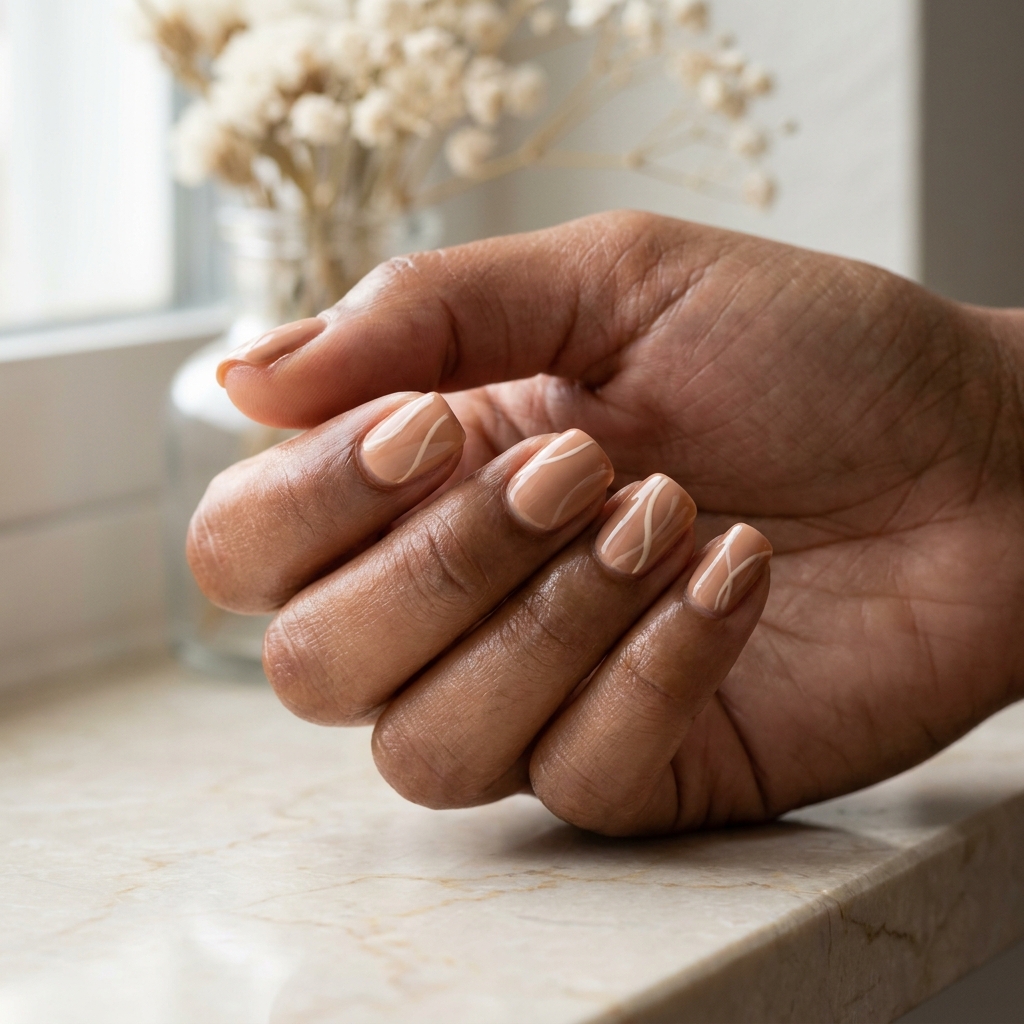
One continuous swirl in mauve on a soft rose base, drawn with a fine brush while the base is fully dry. Rush it wet and the colors bleed grey.
14. Butter Yellow Dots
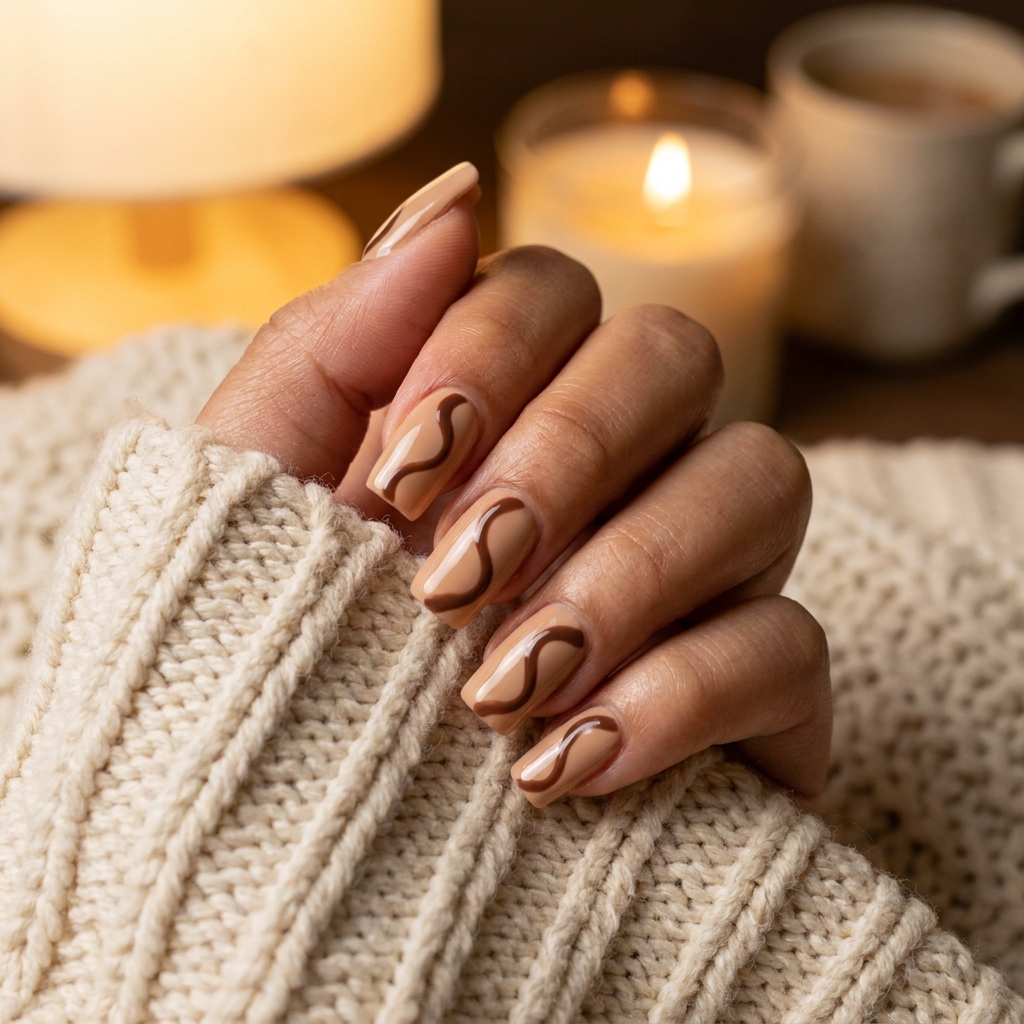
Uneven butter yellow dots over a milk-white base. Five nails, five different dot arrangements. Matching all ten is what makes home manicures look flat.
15. Caramel Color Block With Gold Line
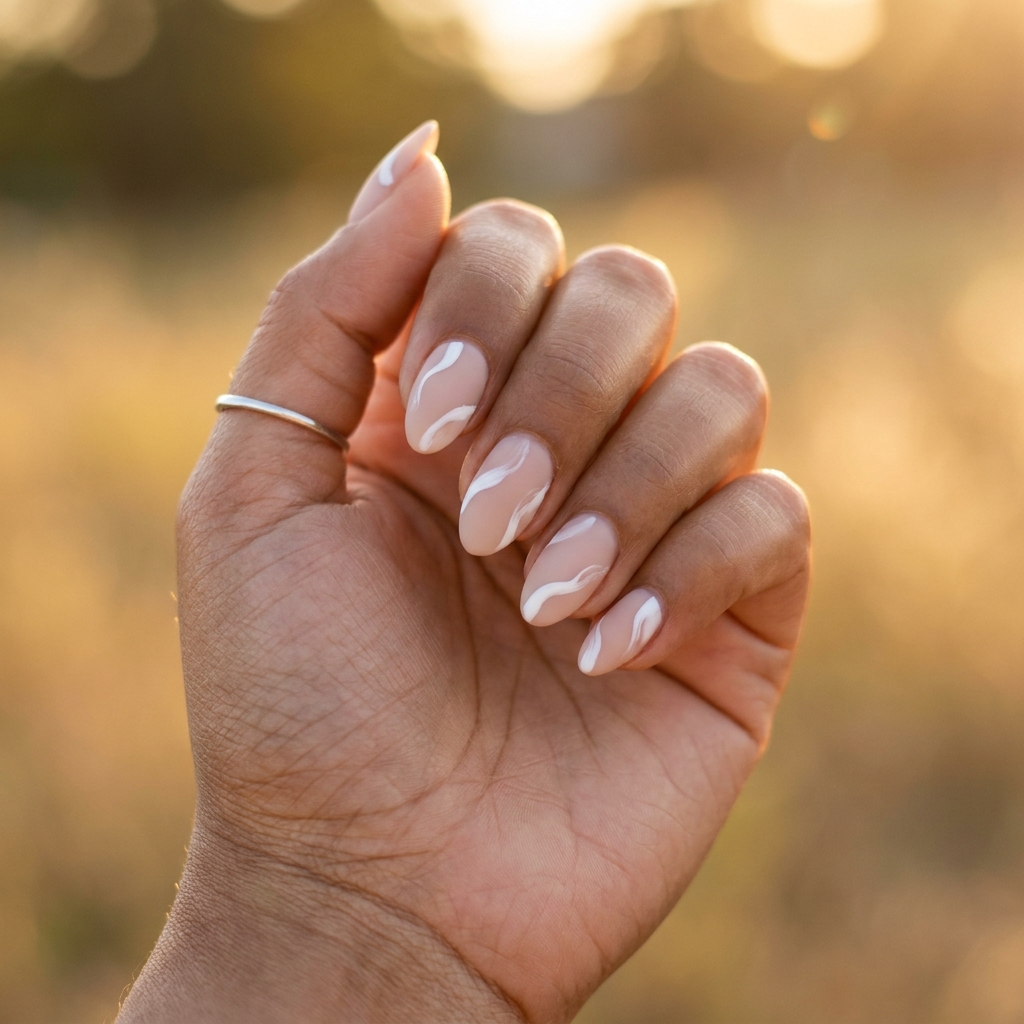
Two blocks, caramel and cream, divided by a hairline gold stripe. The stripe hides the seam where the tape sat.
16. Rust Linework on Latte
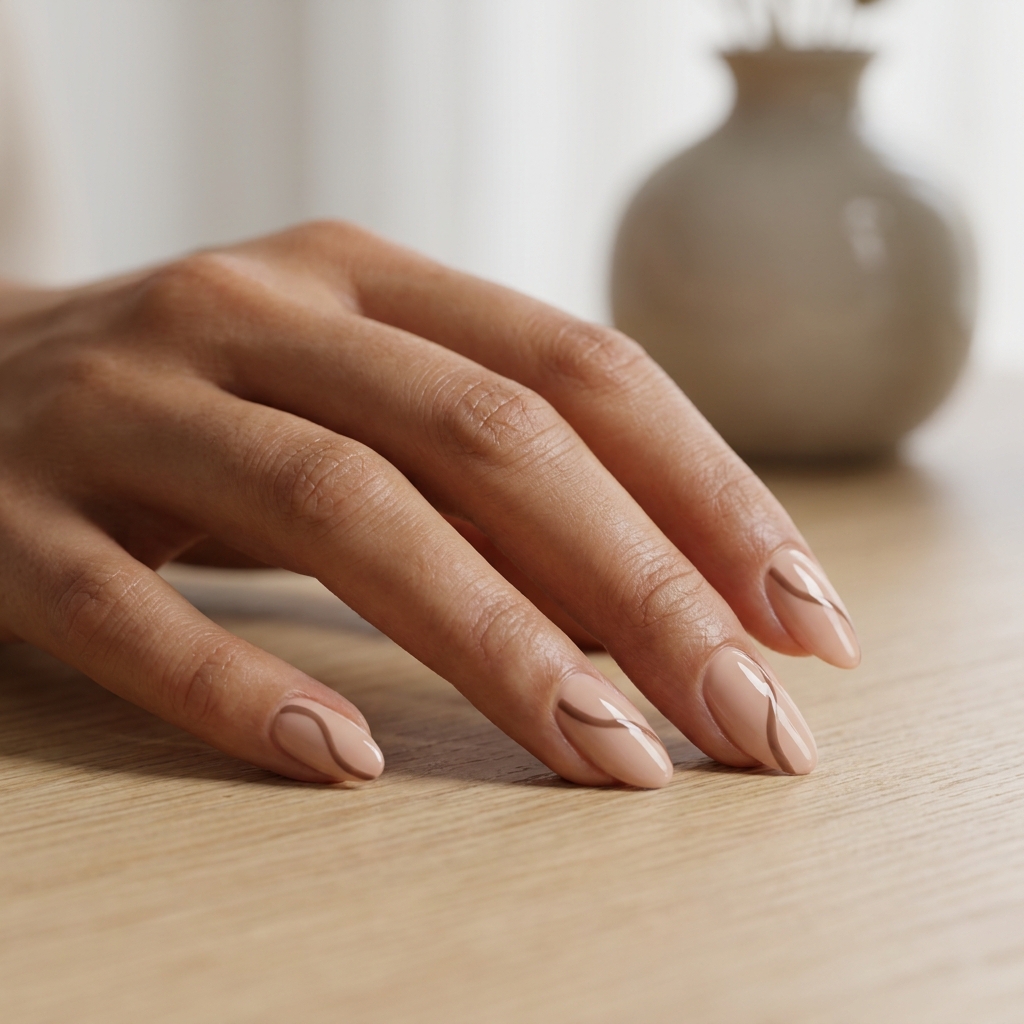
Thin rust lines crossing a latte base at odd angles. Three lines maximum per nail, none of them parallel.
Warm neutrals suit this range, and olive and tan skin pushes that warmth further into earth and jewel territory.
Abstract Nail Designs for Olive and Tan Skin
Olive skin carries a yellow-green cast under the surface, which is exactly why grey, ashy nudes, and cool pinks fall flat on it. The polish and skin compete instead of complementing. Earth tones, jewel tones, and gold are the strongest performers here, and tan skin follows the same logic with a bit more flexibility.
17. Gold Abstract Shapes on Nude
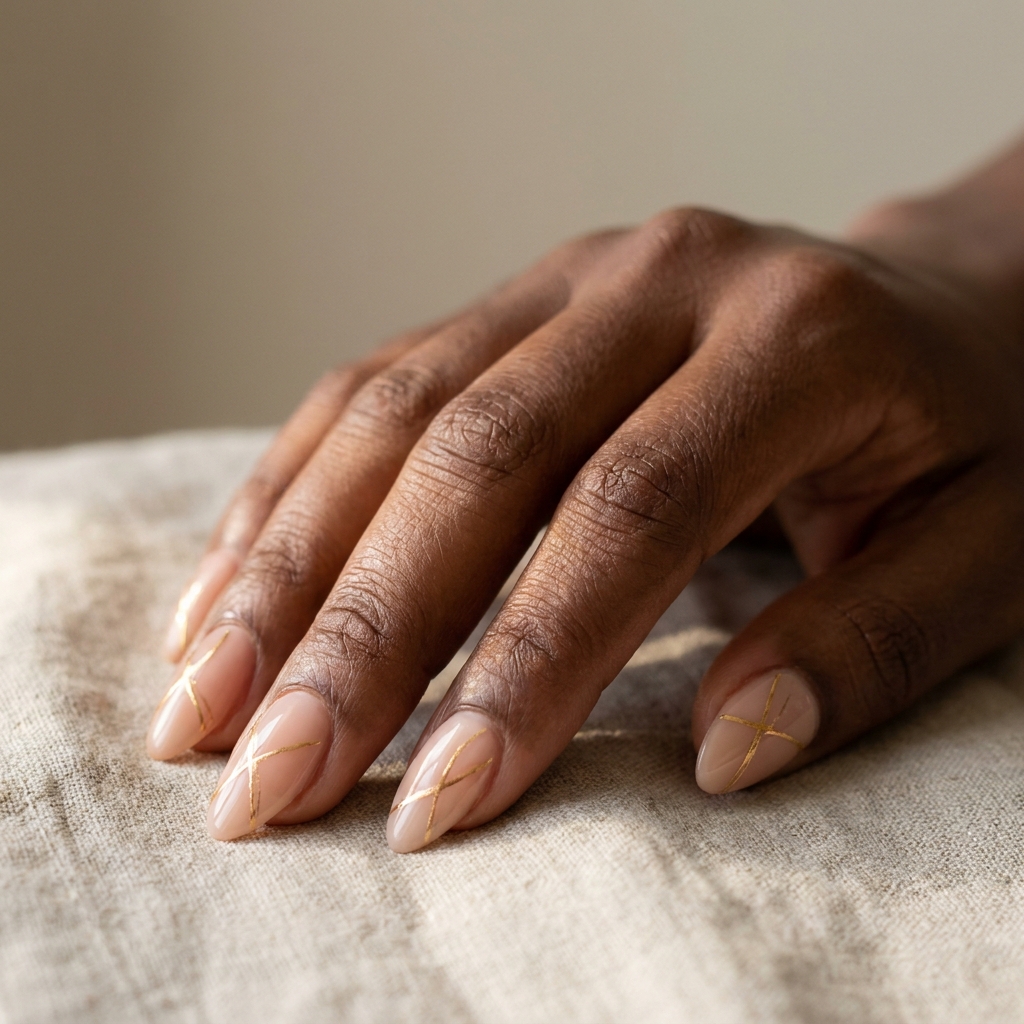
Loose gold leaf shapes on a golden beige base, applied with a foil sheet and a dabbing motion. Gold resonates directly with olive’s warm-gold undertone, which is why it looks deliberate rather than costume.
18. Emerald Swirl on Warm Sand
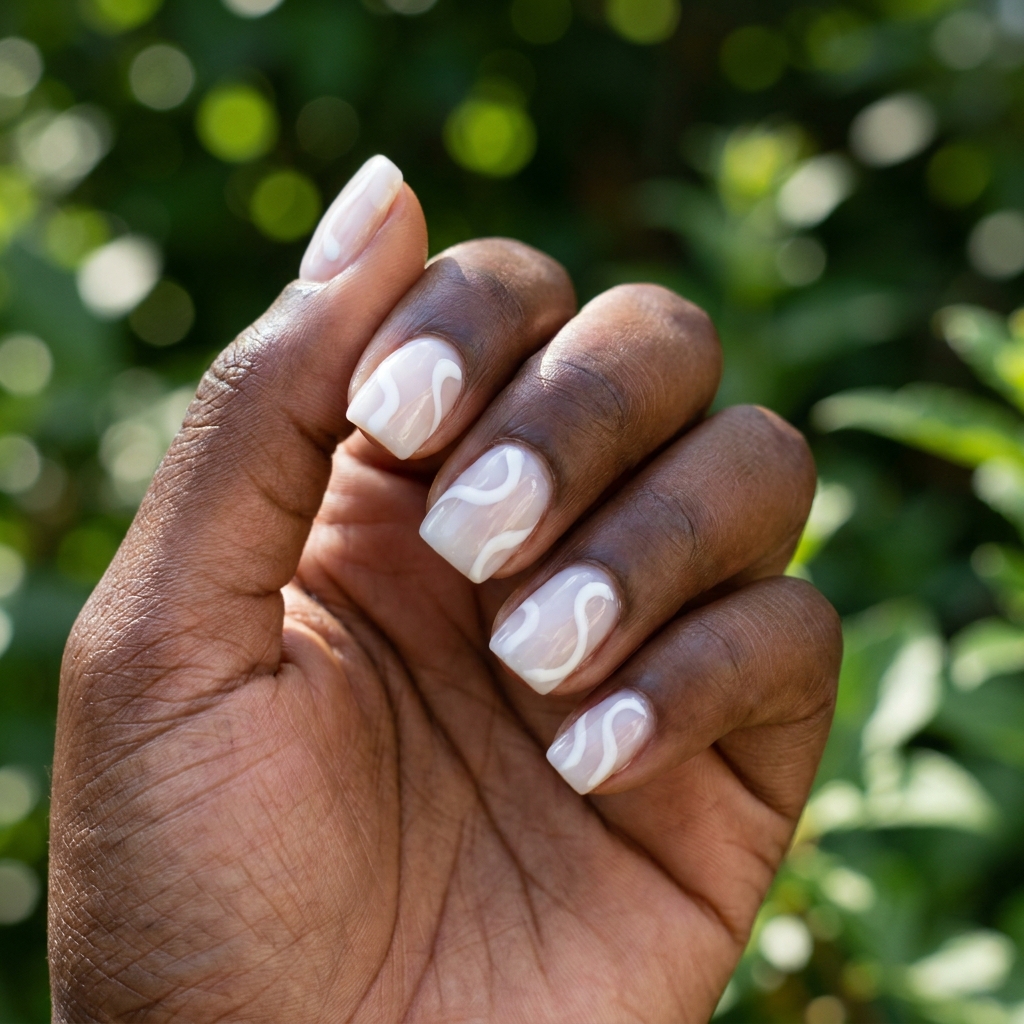
A deep emerald swirl over a warm sand base. Emerald plays on the green already present in olive skin, so the pairing looks intentional instead of accidental.
19. Burnt Sienna Brushstroke
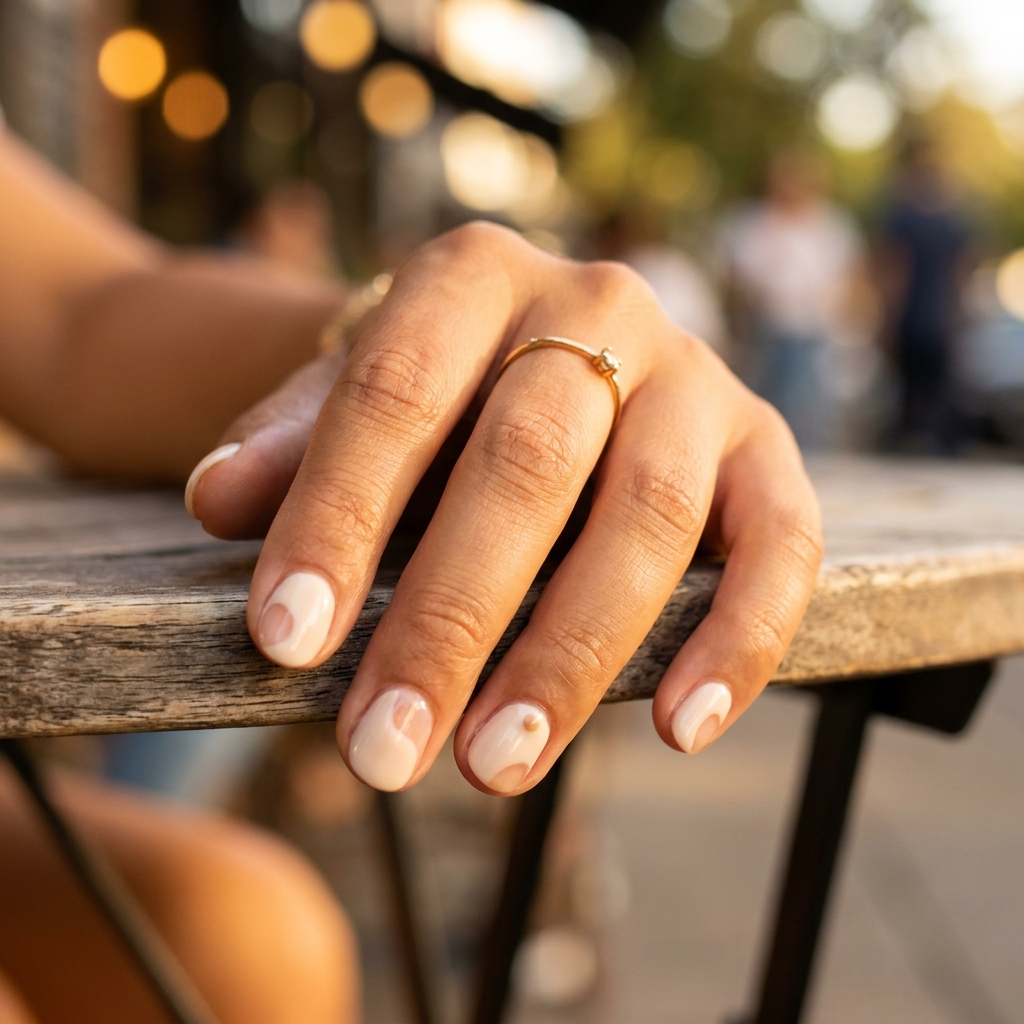
One thick burnt sienna stroke on a toasted almond base. Earthy orange-brown against golden skin creates a sun-warmed effect without any shimmer.
20. Copper Dots and Dashes
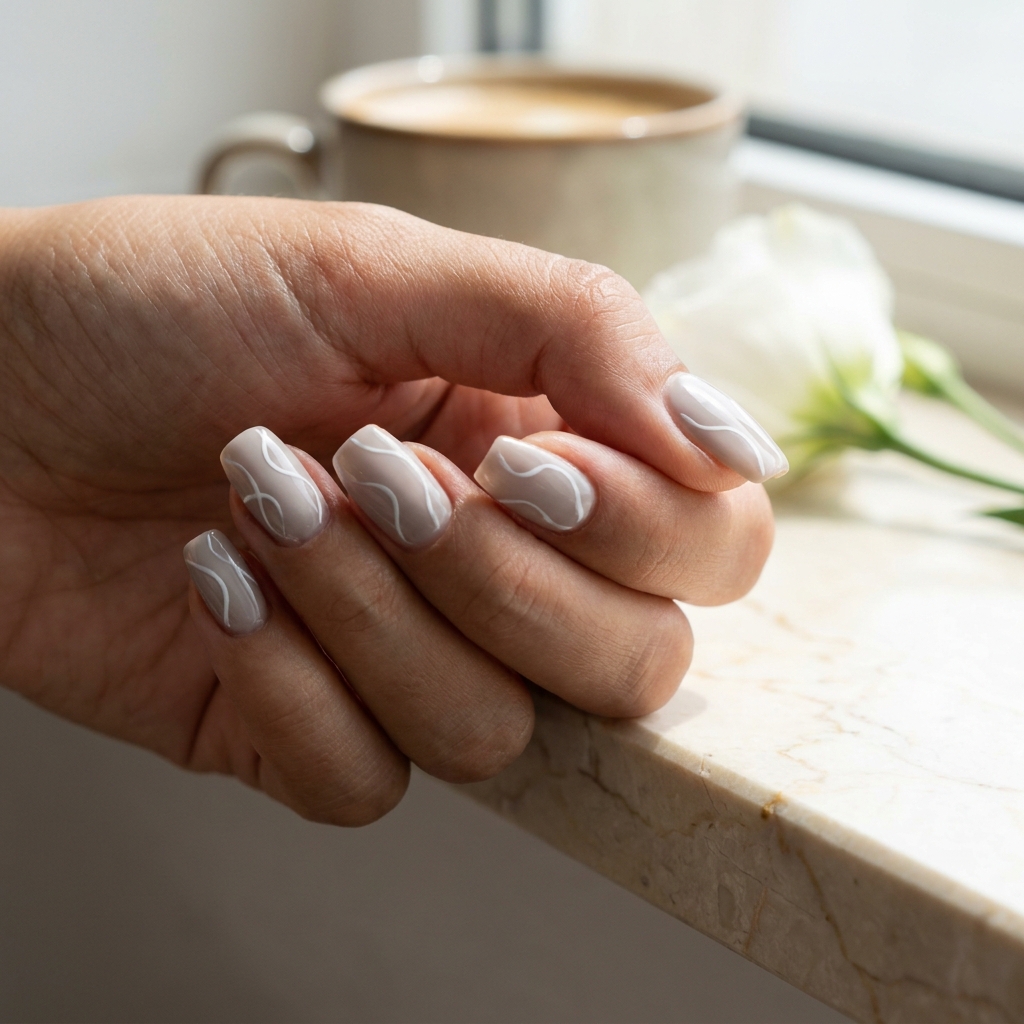
Alternating copper dots and short dashes across a cocoa base. Copper is the metallic that outperforms silver on every olive hand.
21. Plum-Brown Color Block
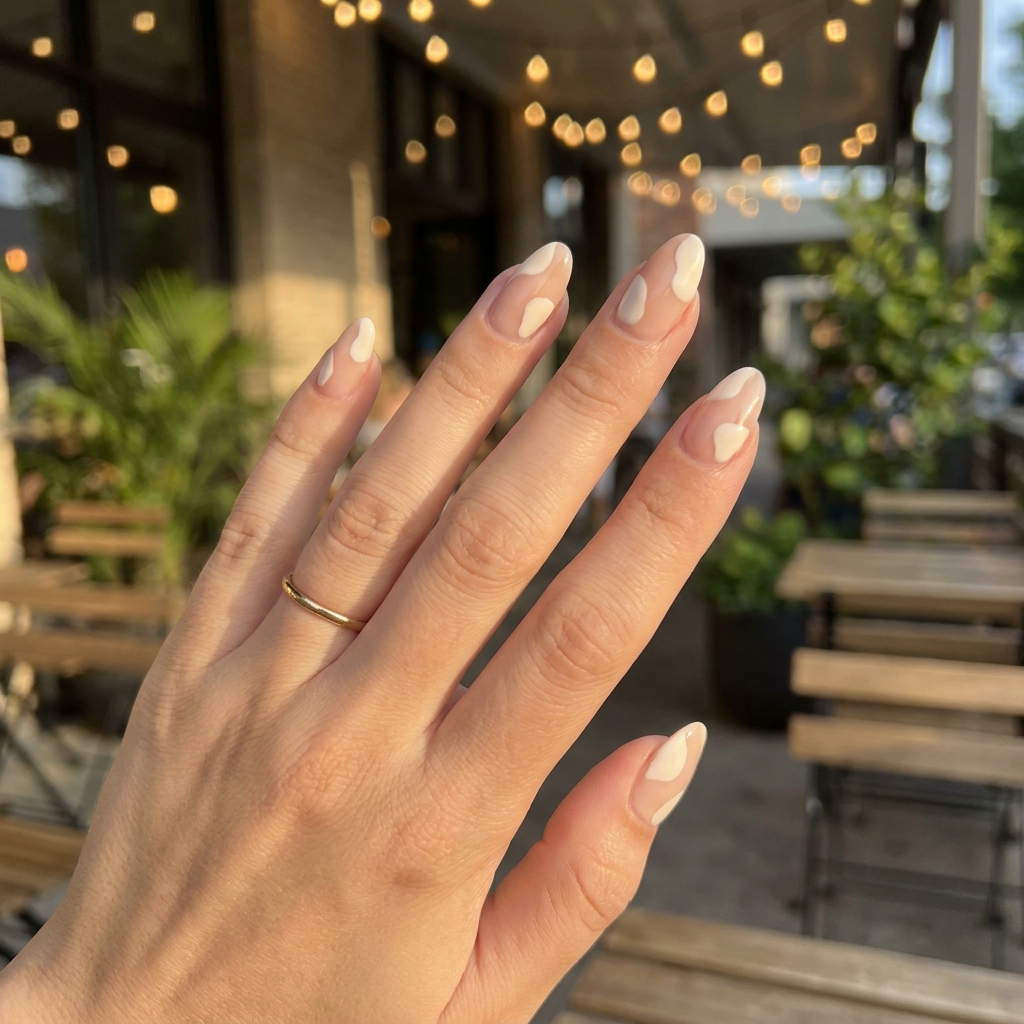
Half the nail plum-brown, half honey nude, split horizontally. Plum-brown pulls warmth from both brown and purple, which is why it never turns cool and muddy here.
22. Olive Green Linework
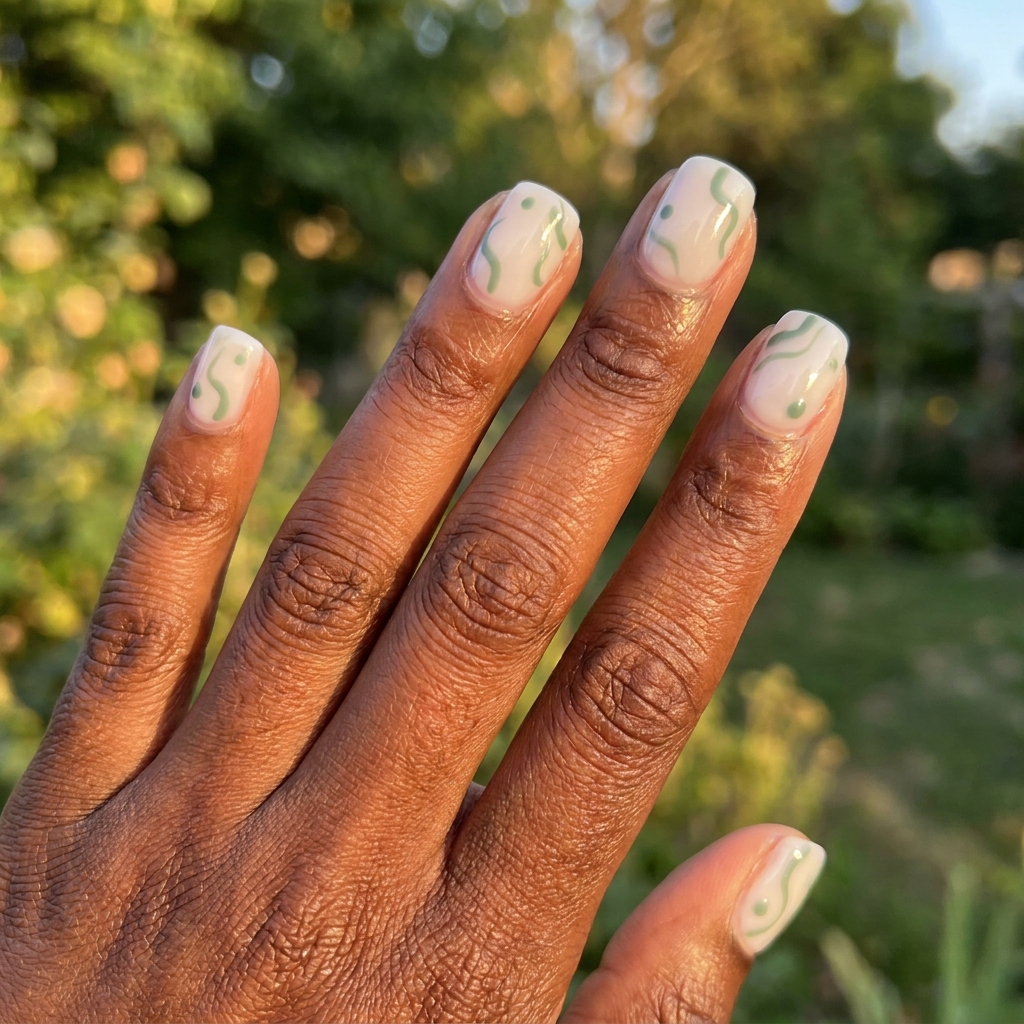
Sage-to-army green lines on a golden beige base. Tone-on-tone, and the effect is quiet rather than loud.
23. Warm White Abstract on Tan
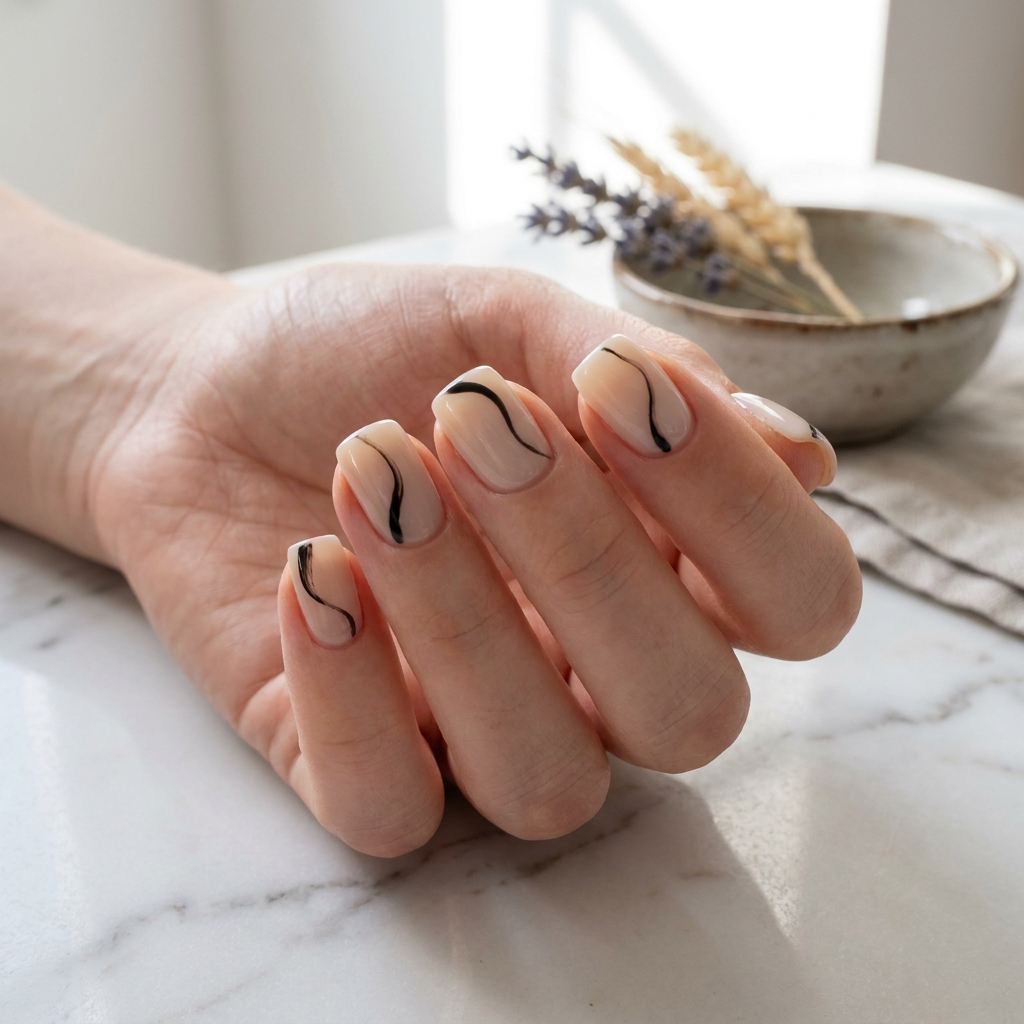
Warm white shapes, never stark white, on bare buffed nails. Stark white pulls blue and clashes with the green cast. Warm white doesn’t.
24. Terracotta and Gold Marble
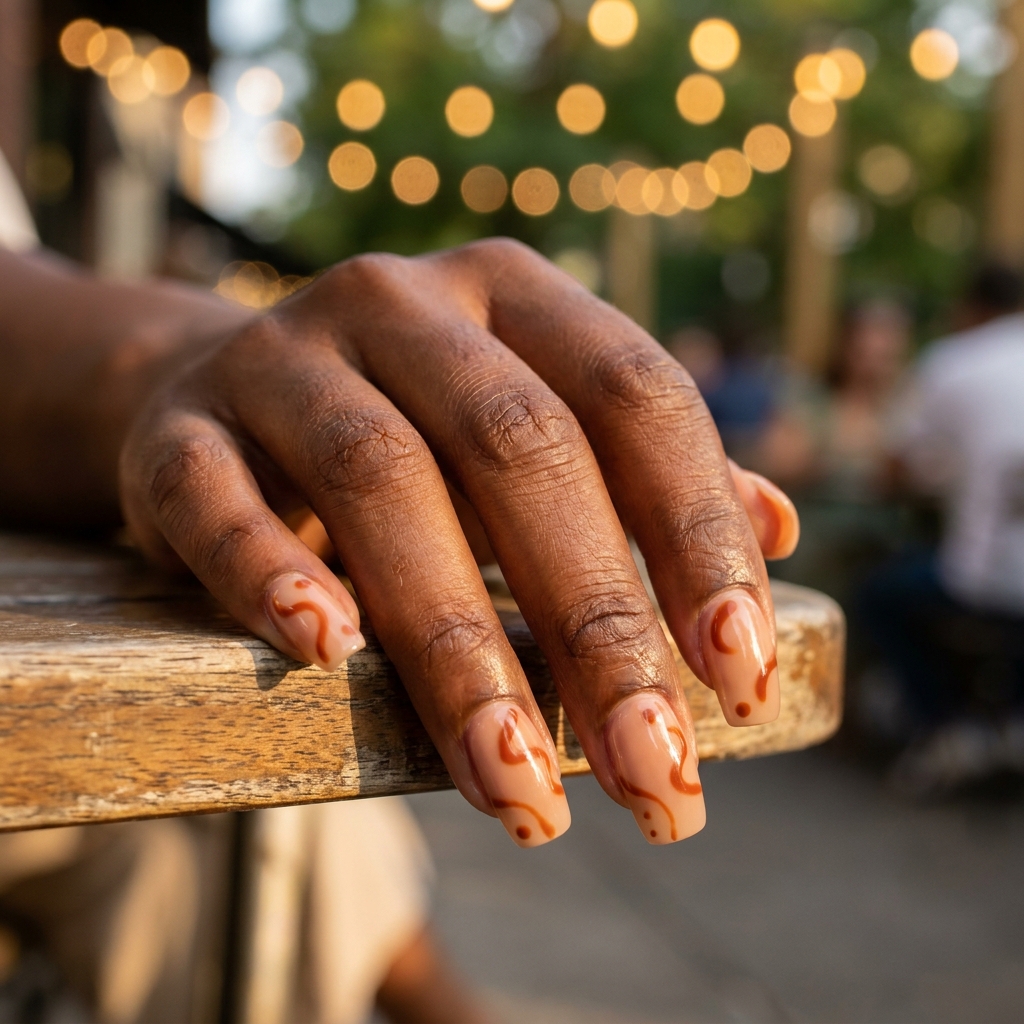
Swirl terracotta and gold together on a wet nude base using a toothpick. No two nails will match, and that’s the whole appeal of marble.
Earth tones anchor olive hands, and deep skin takes that saturation and pushes it as far as it goes.
Abstract Nail Designs for Deep Skin
Deep skin ranges from rich brown to deep espresso, and it carries the highest pigment saturation of any range without looking heavy. The common myth is that deep skin should stay in dark shades. The opposite is true. Bright, saturated color reads more vividly here than anywhere else, and pastels pop instead of disappearing.
25. White Line Abstract on Espresso
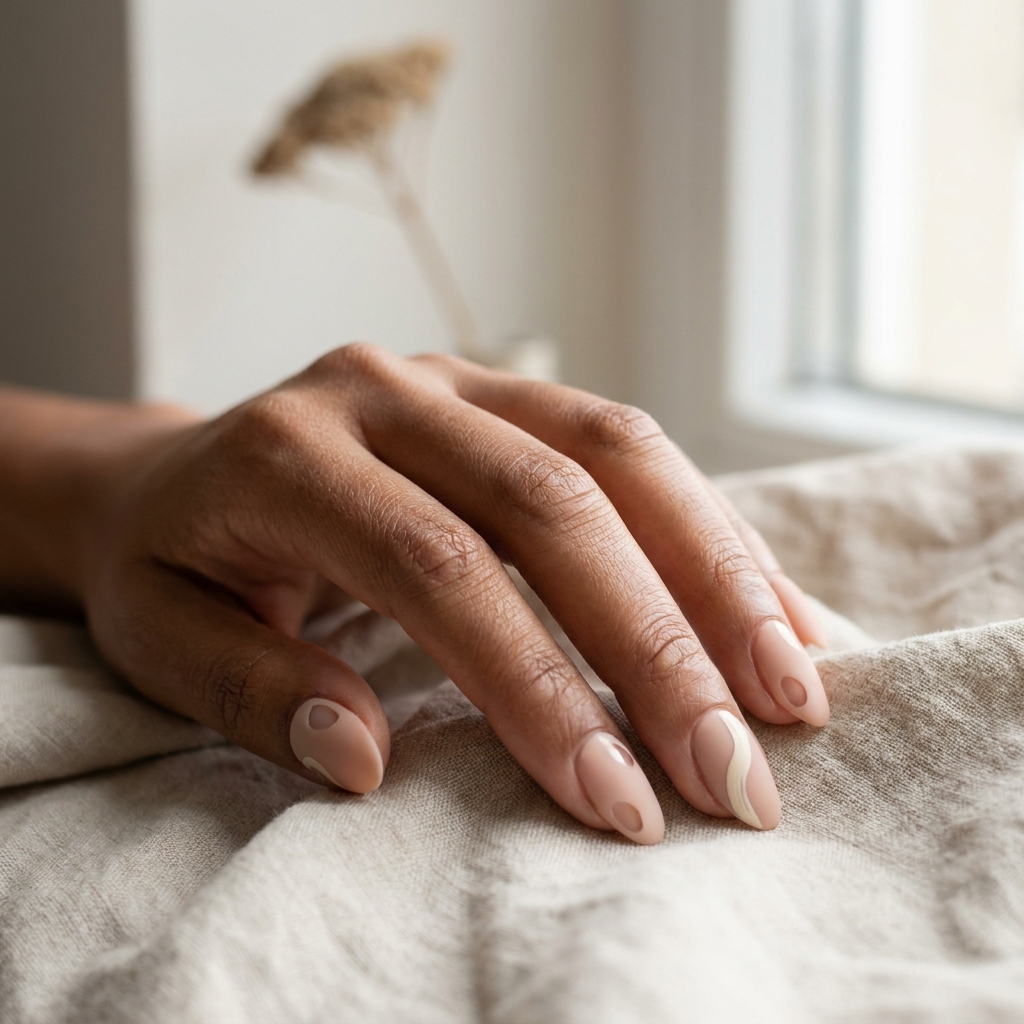
Crisp white linework over a deep espresso base. This is the highest-contrast design in the guide, and deep hands carry it without the harshness fair skin would get.
26. Bright Coral Color Block
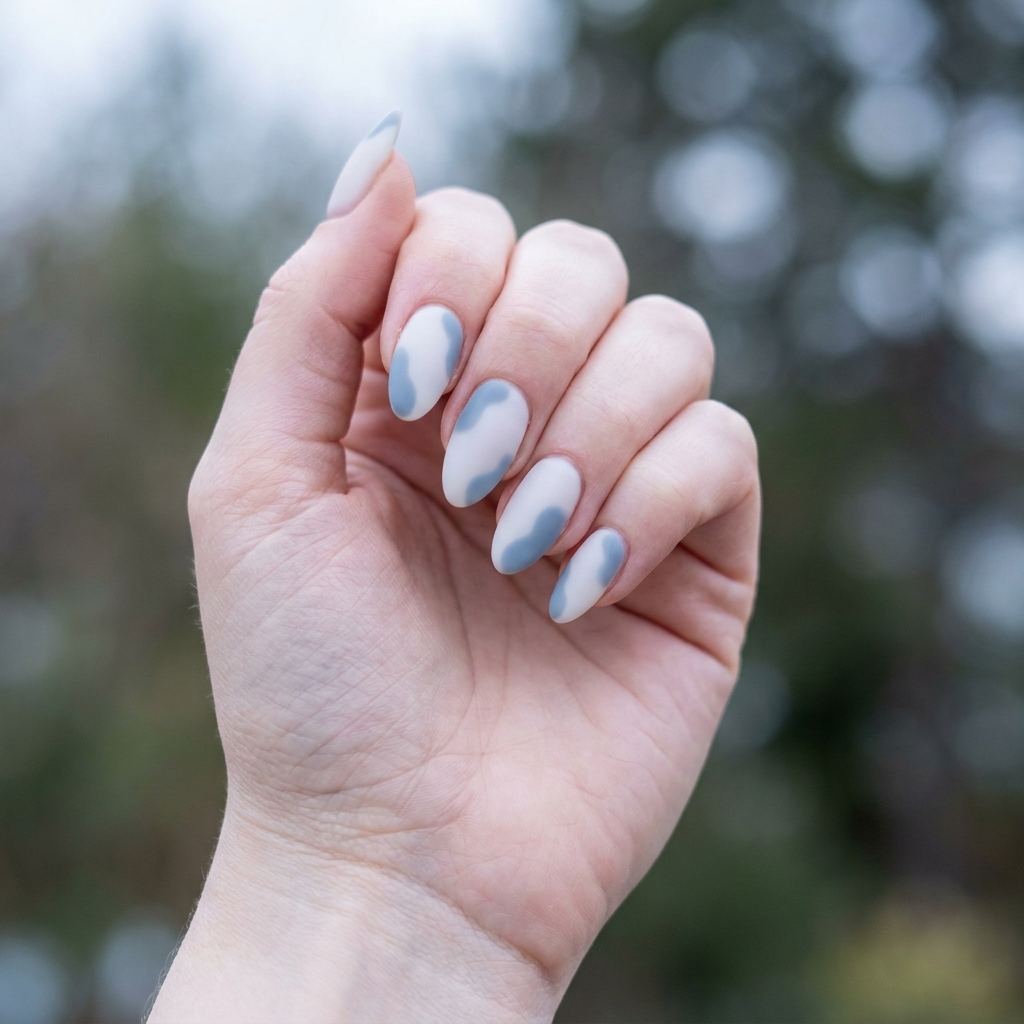
Coral and cocoa split diagonally. Coral is one of the shades that gains intensity against deep skin instead of losing it.
27. Gold Half-Moon on Chocolate
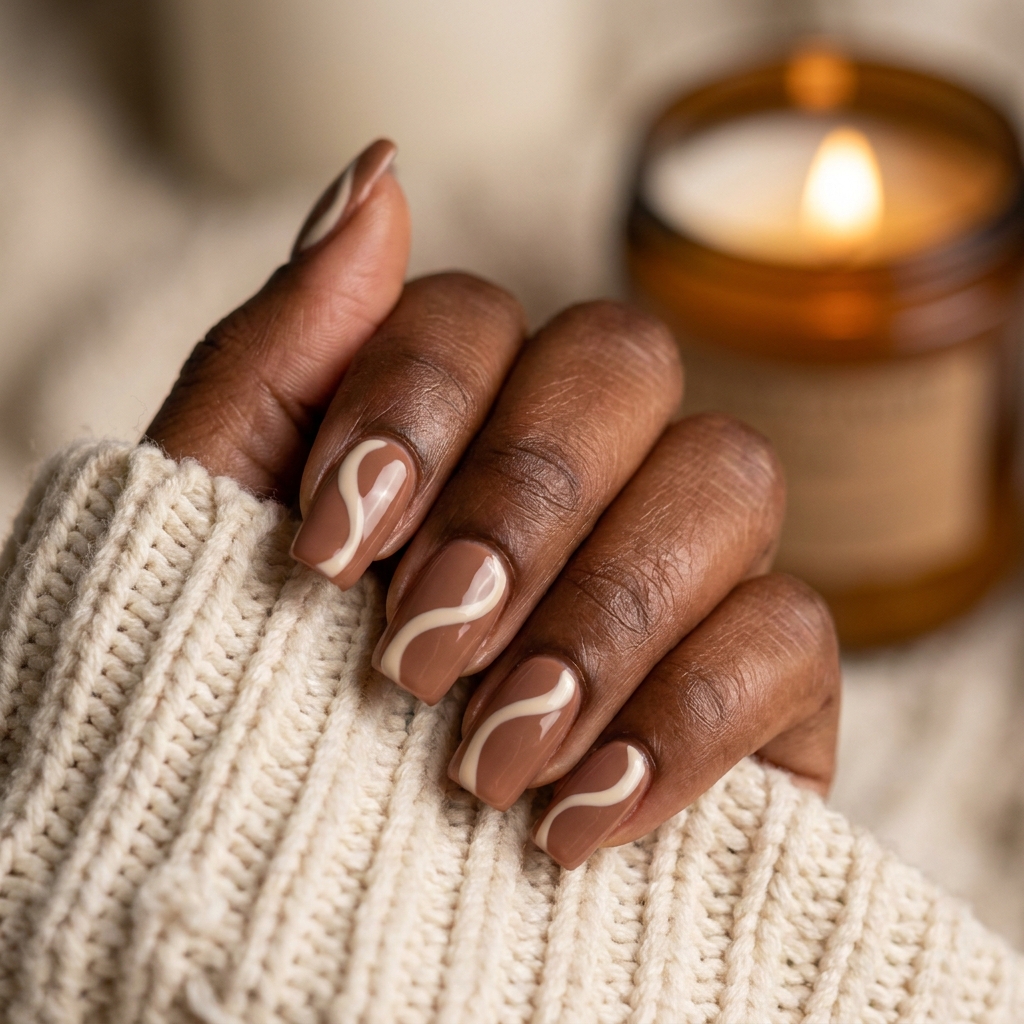
Gold moon, chocolate brown plate. The metallic sits high against the depth of the base and catches light at every angle.
28. Cobalt Swirl on Bare Nail
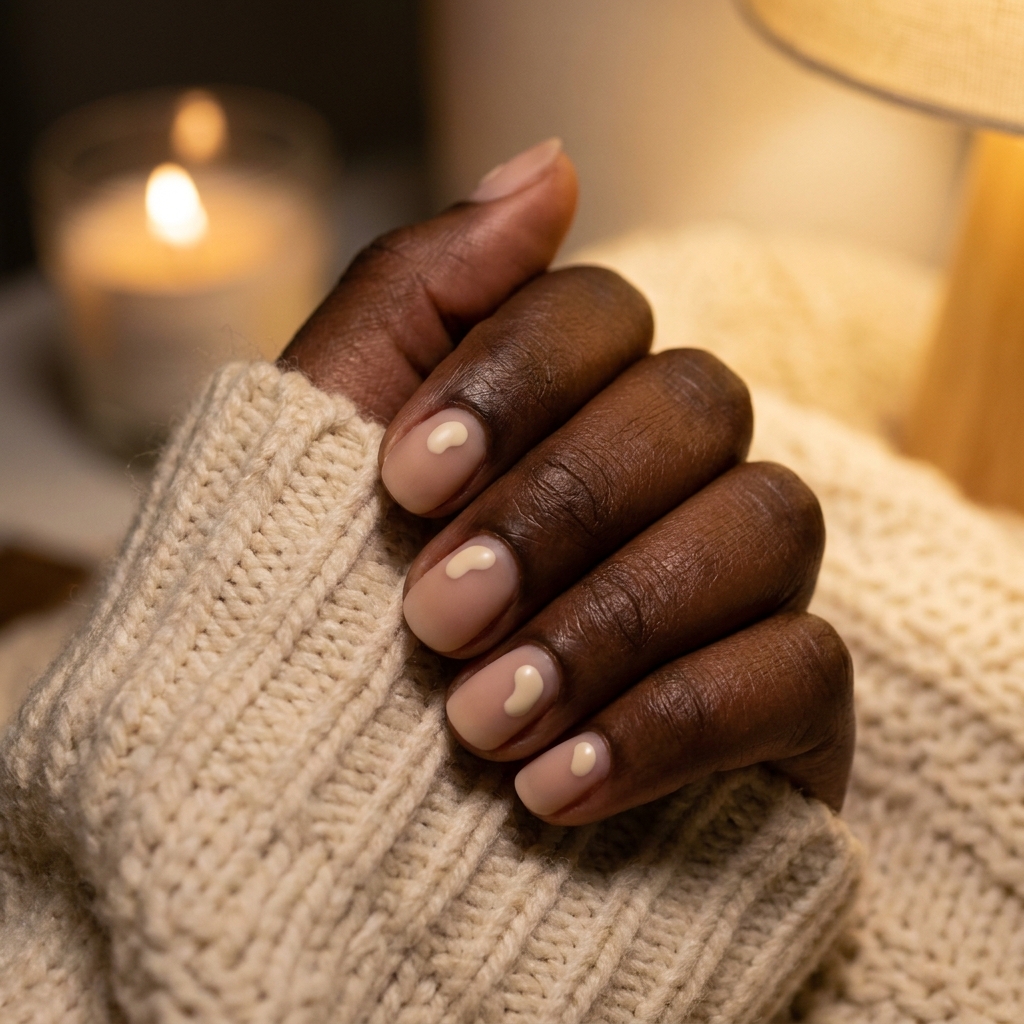
A single cobalt blue swirl over a clear base. The bare nail lets the blue read at full saturation with nothing muting it.
29. Butter Yellow Brushstroke
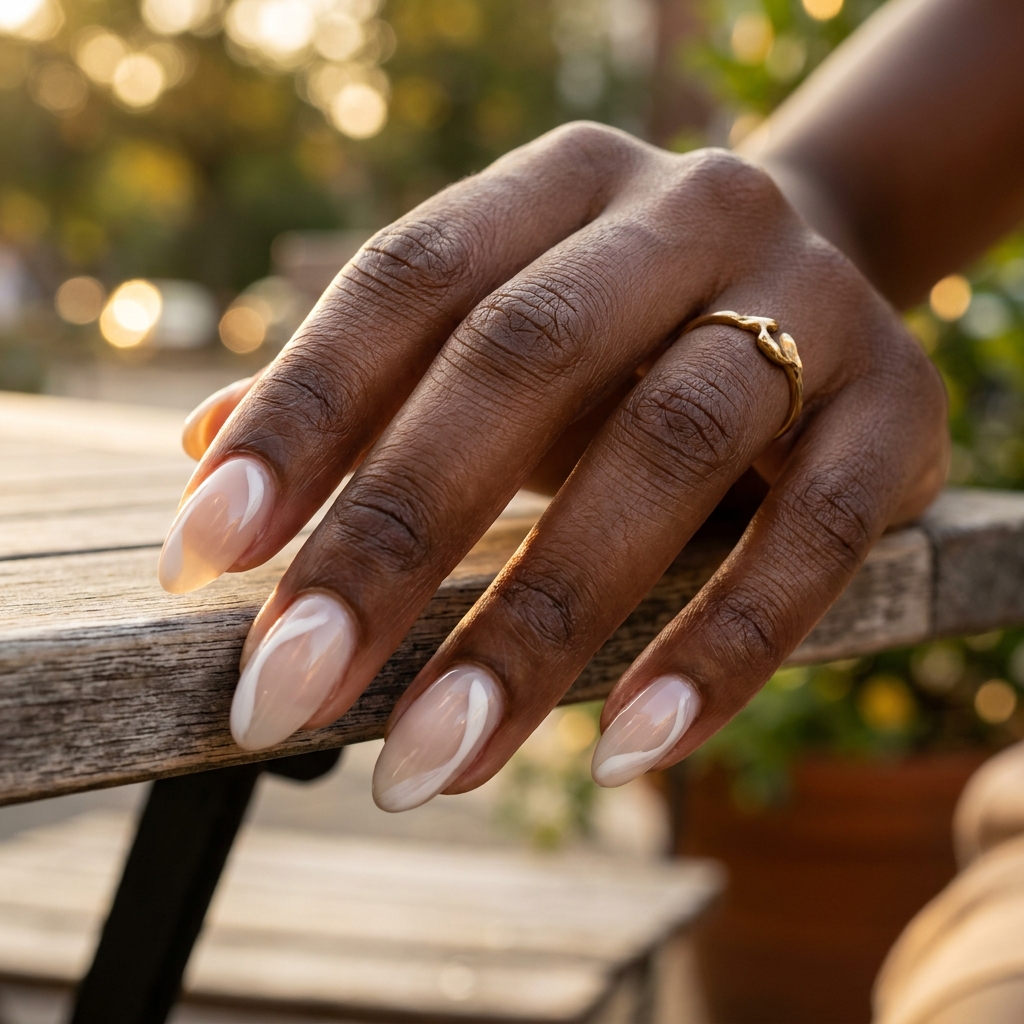
One butter yellow stroke on a deep berry base. Soft pastels look strongest against deep skin, and this pairing proves it.
30. Bronze Dots on Deep Plum
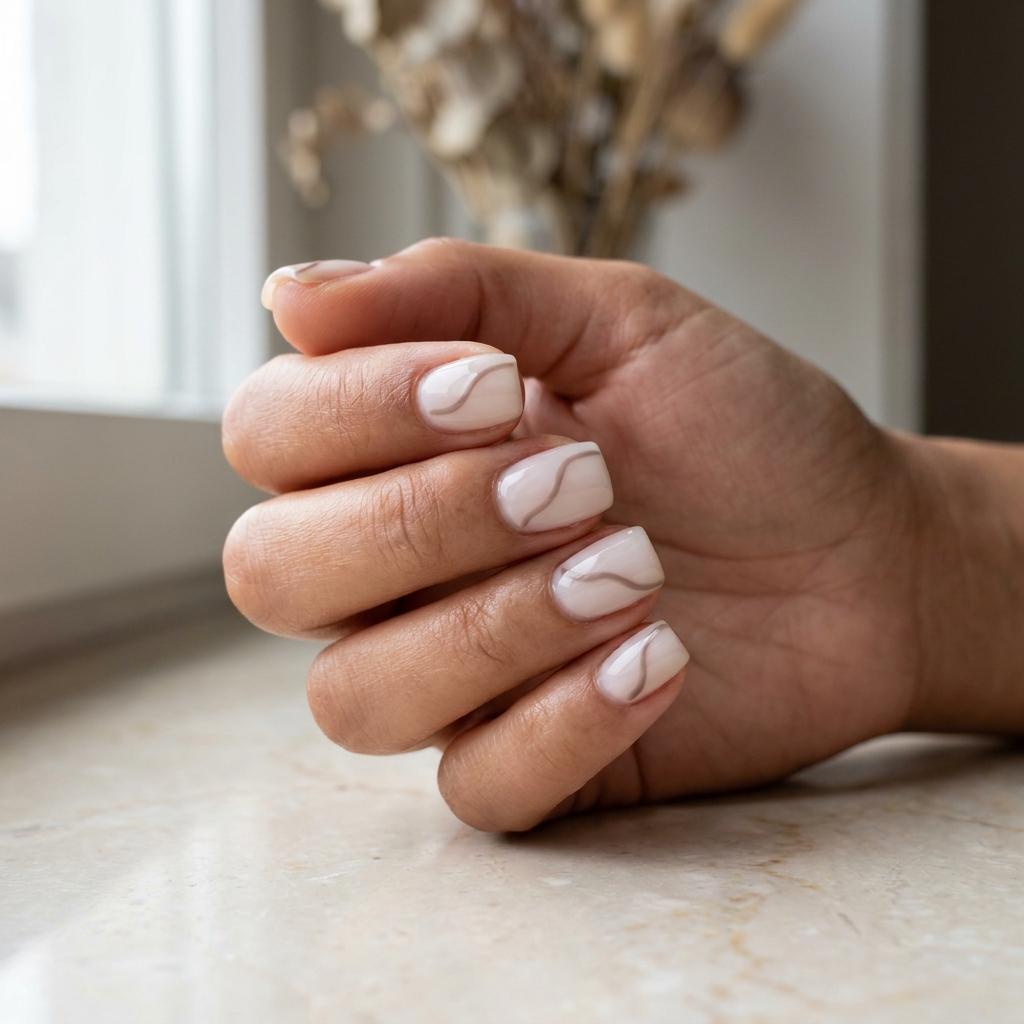
Uneven bronze dots scattered across a deep plum base. Warm metallic on warm depth, glossy topcoat, done in under 20 minutes.
Tools and Finishes That Make Simple Abstract Art Work
Four tools cover every design in this guide, and none of them cost much.
- Dotting tool or the head of a bobby pin for dots of any size
- Striping brush for lines, swirls, and linework
- Flat brush for brushstrokes and color blocking
- Scotch tape for hard-edged geometric splits
Finish matters as much as color. Matte topcoat mutes bright shades and adds a modern edge, so it’s useful when a color feels too loud for the office. Glossy topcoat deepens pigment and makes metallics catch light, which is why olive and deep skin usually benefit from staying glossy. Mixing both on the same nail (matte base, glossy lines) creates a design without adding a single extra color.
Apply a base coat first, let each layer dry completely before adding art, then seal with topcoat. Wet-on-wet is how clean lines turn into grey smudges. And keep a small brush plus remover within reach. Fixing one bad line beats repainting the whole nail.
Frequently Asked Questions
How long does a simple abstract manicure take at home?
Most designs here take 20 to 40 minutes, including drying time between layers. Dots and single brushstrokes finish fastest. Linework and marble take longest because the base has to be bone-dry before you draw over it.
What is tonal collision?
Tonal collision happens when a nail color sits so close to your skin’s underlying cast that the two compete instead of contrast. Olive skin plus a grey-pink nude is the classic example: both carry a muted cast, so the hand looks flat and slightly ashy. Adding warmth or depth to the polish fixes it.
Which skin tone ranges does this guide cover?
Four: fair, light to medium, olive and tan, and deep. Fair covers skin that burns easily and carries pink or peach undertones. Light to medium tans gradually. Olive and tan carry a green-gold cast. Deep ranges from rich brown through espresso.
Can I wear pastel abstract nails on deep skin?
Yes, and they perform better on deep skin than almost anywhere else. Butter yellow, mint, lilac, and baby blue gain contrast against deeper complexions rather than washing out. The idea that deep skin belongs only in dark shades wastes its strongest advantage.
Do I need a nail art brush, or will polish brushes work?
A striping brush helps, but the polish brush handles more than people expect. Brushstroke, color block, and half-moon designs all work with the brush in the bottle. Only fine linework and small dots genuinely need a dedicated tool.
Is gold or silver better for my nails?
Gold suits warm undertones, silver suits cool ones, and neutral undertones carry both. Check your wrist veins: green means gold, blue or purple means silver. Olive and deep skin almost always look better in gold, bronze, or copper, since cool chrome fights the warmth in both.
Which abstract design lasts longest before it looks grown out?
The negative space half-moon wins. Because the design already leaves the moon area bare, three to four weeks of growth blends into the gap rather than exposing a visible line at the cuticle.
What happens if my lines come out crooked?
Nothing. Crooked is correct here. Abstract nail art rewards irregular shapes and uneven spacing, so the wobble in a hand-drawn line is what separates it from a printed sticker. If a line goes badly wrong, wipe it with a brush dipped in remover before the polish sets, then redraw.
Is a nude base better than a colored base for abstract art?
Nude works as the safest base across all four ranges, though the right nude changes per skin tone. Fair hands want pink or ivory nudes. Light to medium wants latte or warm taupe. Olive wants golden beige or toasted almond. Deep wants cocoa or deep caramel. A colored base gives more drama but demands a more careful line color.
Do I need a gel manicure for these designs?
No. Every design here works in regular polish. Gel extends wear to two to three weeks and cures instantly, which helps with linework since the base won’t smudge under the brush. But regular polish plus patience gets the same result for a fraction of the cost.
Pick your range, pick your undertone, pick one design. Two colors and a dotting tool are enough to start, and the crooked line you’re worried about is the one that makes it look hand-painted.